How Cybersecurity Supports Reliable Warehouse Automation
Discover how cybersecurity protects warehouse automation through secure networks, access control, and Hai Robotics' continuous security management.
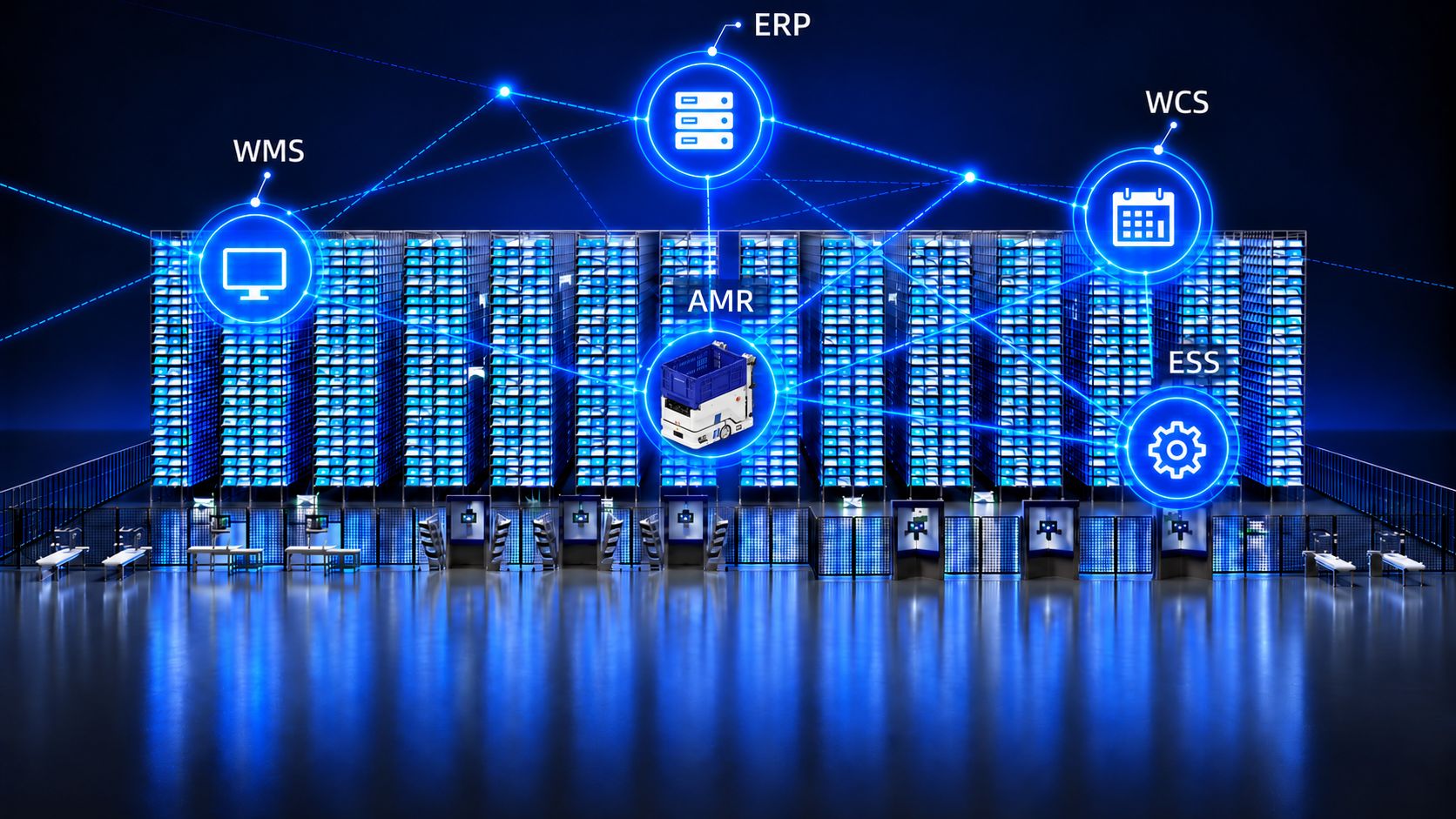
As warehouse automation continues to advance, modern warehouses are becoming highly interconnected operational environments. Real-time coordination between autonomous mobile robots (AMRs), warehouse management systems (WMS), warehouse control systems (WCS), and enterprise resource planning (ERP) platforms is helping businesses improve order fulfillment efficiency, optimize resource utilization, and enhance supply chain flexibility. At the same time, more warehouse operations depend on continuous communication and data exchange between software systems, making the reliability of digital infrastructure increasingly critical to everyday performance.
However, greater connectivity also introduces more complex cybersecurity risks. A ransomware attack could prevent orders from being processed or released, a communication failure could disrupt robot scheduling, and unauthorized system access could compromise critical software and equipment operations. These risks extend beyond protecting information assets. They can directly affect order fulfillment, customer service, and business continuity. As a result, cybersecurity is no longer solely an IT concern. It has become a fundamental requirement for the long-term reliability of warehouse automation systems.
-
What Cybersecurity Risks Do Connected Warehouse Automation Systems Face?
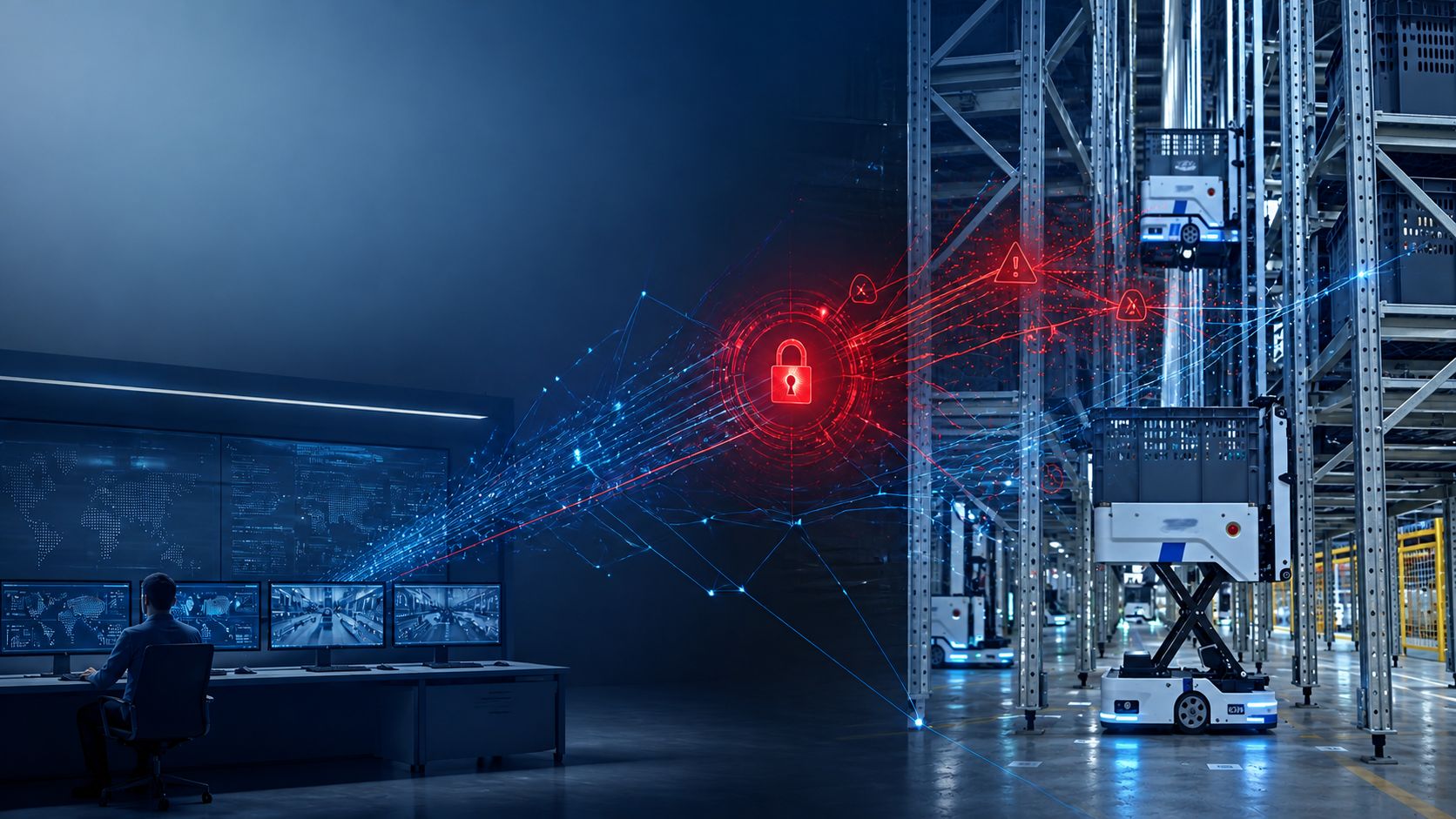
Modern automated warehouses rely on multiple interconnected software platforms, control systems, and intelligent devices. While this architecture improves operational coordination, it also expands the potential cyberattack surface. When a critical system is compromised, security issues can spread through network connections or system dependencies, potentially affecting other parts of warehouse operations.
Unauthorized system access is one of the key risks. Warehouse operators, IT administrators, maintenance engineers, and third-party service providers typically require different levels of system access. Without effective authentication and access controls, unauthorized users could modify system configurations or access critical functions, potentially disrupting automated equipment. As remote technical support becomes more common, managing external connections and user permissions is becoming increasingly important.
Malware and ransomware attacks can also significantly disrupt warehouse operations. If a WMS, control server, or other critical software application is compromised, order processing, task execution, and inventory updates may be affected even when the robotic hardware remains fully operational. For automated warehouses handling high order volumes continuously, prolonged system downtime can lead to order backlogs, delivery delays, and additional recovery costs.
In addition, ERP, WMS, WCS, and robot management systems exchange information through numerous interfaces. If interface authentication, communication security, or network access management is insufficient, a vulnerability in one system could affect others connected to it. Cybersecurity in warehouse automation must therefore go beyond protecting individual applications or devices. It requires a system-wide approach that minimizes the potential operational impact of security incidents.
-
Building Multi-Layered Protection Through Secure Network Architecture and Communication
Effective cybersecurity begins at the system architecture design stage. For warehouses combining enterprise IT infrastructure with automation control systems, network segmentation, firewall management, and secure communication are essential protective measures. These controls must work together to restrict unnecessary network access while maintaining reliable communication across interconnected systems.
Network segmentation and isolation help businesses establish security boundaries based on system functions and risk levels. For example, enterprise IT networks typically support ERP platforms and office applications, while automation control networks handle robot scheduling and equipment communication. Separating these environments and using firewalls to restrict unnecessary ports, services, and communication paths can reduce the risk of unauthorized access and the lateral movement of malware. However, network security policies must also account for the real-time communication and reliability requirements of automated operations.
Secure system integration is equally important. WMS, WCS, and robot scheduling systems continuously exchange task instructions and operational status information. Their interfaces must therefore provide reliable data transmission while incorporating appropriate authentication, access control, and encrypted communication mechanisms. These measures help reduce the risk of data interception, tampering, and unauthorized access during system-to-system communication.
Within Hai Robotics' HaiSafety framework, system and information security are integral parts of the overall safety approach. Hai Robotics incorporates encrypted communication, data protection, and system stability measures to support secure connectivity between robots, warehouse software, and related business systems. The company also offers on-premises deployment options to accommodate different customer requirements for IT architecture, system deployment, and data management.
In practice, network segmentation, firewall configurations, and communication policies must still be designed around each customer's existing IT infrastructure. Close collaboration between automation providers, system integrators, and customer IT teams is essential to achieving the right balance between cybersecurity, system performance, and operational requirements.
-
Reducing Security Risks Through Access Control and Operational Traceability
Beyond network perimeter protection, managing system access permissions is another critical aspect of warehouse automation cybersecurity. Automated warehouses involve employees with different responsibilities as well as external service providers. If all users have the same level of access, the risk of operational errors increases, and the potential impact of a security incident may become more severe.
Role-Based Access Control (RBAC) allows organizations to assign permissions according to user responsibilities. For example, warehouse operators may need to monitor task status, maintenance engineers may require equipment diagnostic functions, and system administrators may be responsible for critical configurations. By following the principle of least privilege and regularly reviewing unnecessary permissions, businesses can limit system access and reduce security risks associated with human error or unauthorized activities.
Hai Robotics adopts role-based access control mechanisms to align system permissions with user responsibilities. The company also supports the recording and traceability of critical operations, providing information that can assist with incident investigations and security reviews. Combining access control with operational traceability helps improve the consistency, accountability, and transparency of system management.
Remote maintenance must also be incorporated into security management practices. Remote technical support enables engineers to diagnose equipment issues and maintain software systems more efficiently, but external connections may introduce additional security risks. Businesses should implement appropriate authentication, authorization, and activity logging for remote access in accordance with their IT security policies. More stringent controls may be necessary for privileged operations, helping protect critical systems while maintaining the efficiency of technical support.
-
Strengthening System Resilience Through Threat Prevention and Continuous Response
Cybersecurity is not a one-time implementation. As software versions change, systems expand, and cyber threats evolve, automated warehouses need ongoing vulnerability management, security updates, and incident response mechanisms. For warehouses operating continuously over long periods, security measures must not only identify and address risks but also consider their potential impact on daily operations.
Software vulnerabilities may exist in servers, applications, and embedded systems within automation equipment. Without continuous assessment and updates, known vulnerabilities may remain exposed and become potential entry points for attackers. Security updates therefore require appropriate risk assessments, compatibility testing, and remediation verification to minimize security exposure while avoiding unnecessary disruption to operational systems.
Hai Robotics has established a Product Security Incident Response Team (PSIRT) to support a structured process covering vulnerability identification, risk assessment, remediation verification, and security communication. According to the company's publicly available information security support procedures, the PSIRT receives potential security issue reports from customers, partners, internal security reviews, and continuous monitoring activities. The team acknowledges reported issues within 24 hours and initiates a preliminary assessment.
For confirmed security issues, the team references industry frameworks such as the Common Vulnerability Scoring System (CVSS), considering vulnerability severity, potential impact, and the actual operating environment to determine response priorities. Relevant technical teams then coordinate remediation or mitigation measures. Following remediation, the team conducts necessary verification and provides security information, progress updates, and recommended actions through channels such as security advisories, helping customers understand and address relevant risks.
Meanwhile, malware protection, anomaly monitoring, and system recovery are equally important for improving cybersecurity resilience. Businesses should combine server and endpoint protection, network isolation, system backups, and emergency recovery plans to reduce the operational impact of cyber incidents. In automated warehouses, recovery may also involve verifying equipment status, restoring operational tasks, and validating communication between systems. IT and warehouse operations teams must therefore work together to develop appropriate recovery procedures.
Hai Robotics' product security management and ongoing PSIRT response mechanisms complement customers' own IT security practices. By integrating threat prevention, vulnerability response, and recovery preparedness, organizations can reduce the likelihood of successful cyberattacks while improving their ability to contain incidents and maintain business continuity.
-
Integrating Cybersecurity Throughout the Automation System Lifecycle
Cybersecurity should be considered throughout the entire lifecycle of a warehouse automation system, from solution design and product development to deployment and long-term operation. During the design stage, businesses need to identify system connectivity requirements, network boundaries, and potential risks. During deployment, interface security, access permissions, and network configurations should be validated. Once the system is operational, security controls must continue to evolve as software is updated, equipment is added, and business requirements change.
For automation providers, product security must also be considered from the earliest stages of development. Integrating security requirements, risk assessments, testing, and vulnerability management into the development process helps identify potential issues before products enter operation. It also establishes a foundation for ongoing maintenance and continuous improvement.
Hai Robotics incorporates information security requirements into product development and maintenance through structured secure development processes. The company has obtained ISO/IEC 27001 information security management system certification and IEC 62443-4-1 certification related to secure product development for industrial automation. These certifications support a systematic approach to information security management at the organizational level and cybersecurity throughout the product development lifecycle. What IEC 62443 Means for Your Automated Warehouse and Why It Matters to You
IEC 62443-4-1 focuses on areas including product security requirements, secure design and development, security verification, vulnerability handling, and security updates. In alignment with this standard, Hai Robotics integrates systematic security testing, vulnerability lifecycle management, and controlled security updates into its product development practices. Combined with its ongoing PSIRT response mechanism, this approach supports the identification, assessment, and remediation of potential security issues discovered during product operation.
As warehouse operations scale and automation systems continue to evolve, existing security configurations may need to be reassessed. Cybersecurity cannot rely on a single technology or protection measures implemented at one stage of a project. It requires a combination of secure product development, continuous vulnerability management, and effective security operations at the customer site. By connecting secure development practices with long-term security response capabilities, Hai Robotics aims to provide ongoing information security support throughout the automation system lifecycle.
-
Secure Connectivity Is the Foundation of Reliable Warehouse Automation
As robots, software platforms, and business systems become increasingly interconnected, cybersecurity is becoming fundamental to the long-term reliability of warehouse automation. Well-designed network architectures help limit the spread of potential threats, while access controls and encrypted communication reduce the risks associated with unauthorized access and insecure connections. Continuous vulnerability management, security updates, and incident response mechanisms further help organizations address evolving cybersecurity challenges.
Through its HaiSafety framework, Hai Robotics incorporates secure communication, access management, data protection, and system stability into its overall safety approach. Combined with structured secure product development processes and the PSIRT vulnerability response mechanism, these capabilities support the continuous improvement of product and system information security. Bringing together technical safeguards, security management practices, and ongoing response processes helps support reliable automation operations.
The warehouses of the future will require more than greater automation efficiency and flexibility. They will also need the resilience to address evolving cyber threats and operational risks. By advancing cybersecurity alongside automation technologies, businesses can build safer, more reliable, and more resilient warehouse operations while protecting the long-term value of their automation investments.