Reverse Logistics in Circular Fashion: Sustainable Warehousing Solutions for Apparel Returns
Discover how reverse logistics enables circular fashion, and how warehouse automation helps apparel brands turn returns into revenue while improving efficiency and sustainability.
A returned jacket sits in a processing queue for three weeks, missing its selling season entirely. Meanwhile, the brand's sustainability report promises circular fashion commitments it can't operationally deliver.
This gap between circular ambitions and warehouse reality is where most apparel brands struggle. Return rates in online fashion now hit 30-40%, and traditional warehouses designed for one-way flow simply weren't built to handle products moving backward through the supply chain at scale.
This guide breaks down how reverse logistics works in circular fashion, what sustainable warehousing actually requires, and which automation technologies turn returns from a cost center into a value recovery operation.
Why apparel returns are creating a reverse logistics crisis
Managing apparel returns through reverse logistics in a circular fashion economy means building closed-loop systems where returned garments flow back into resale, repair, or recycling rather than ending up in landfills. When brands get this right, returned products become revenue. When they don't, returns pile up, lose value, and eventually become waste.
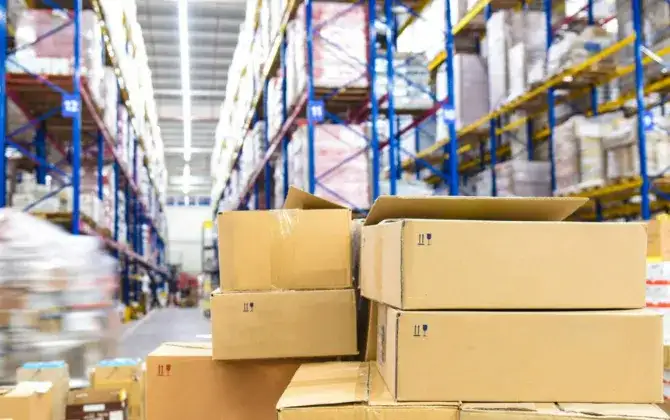
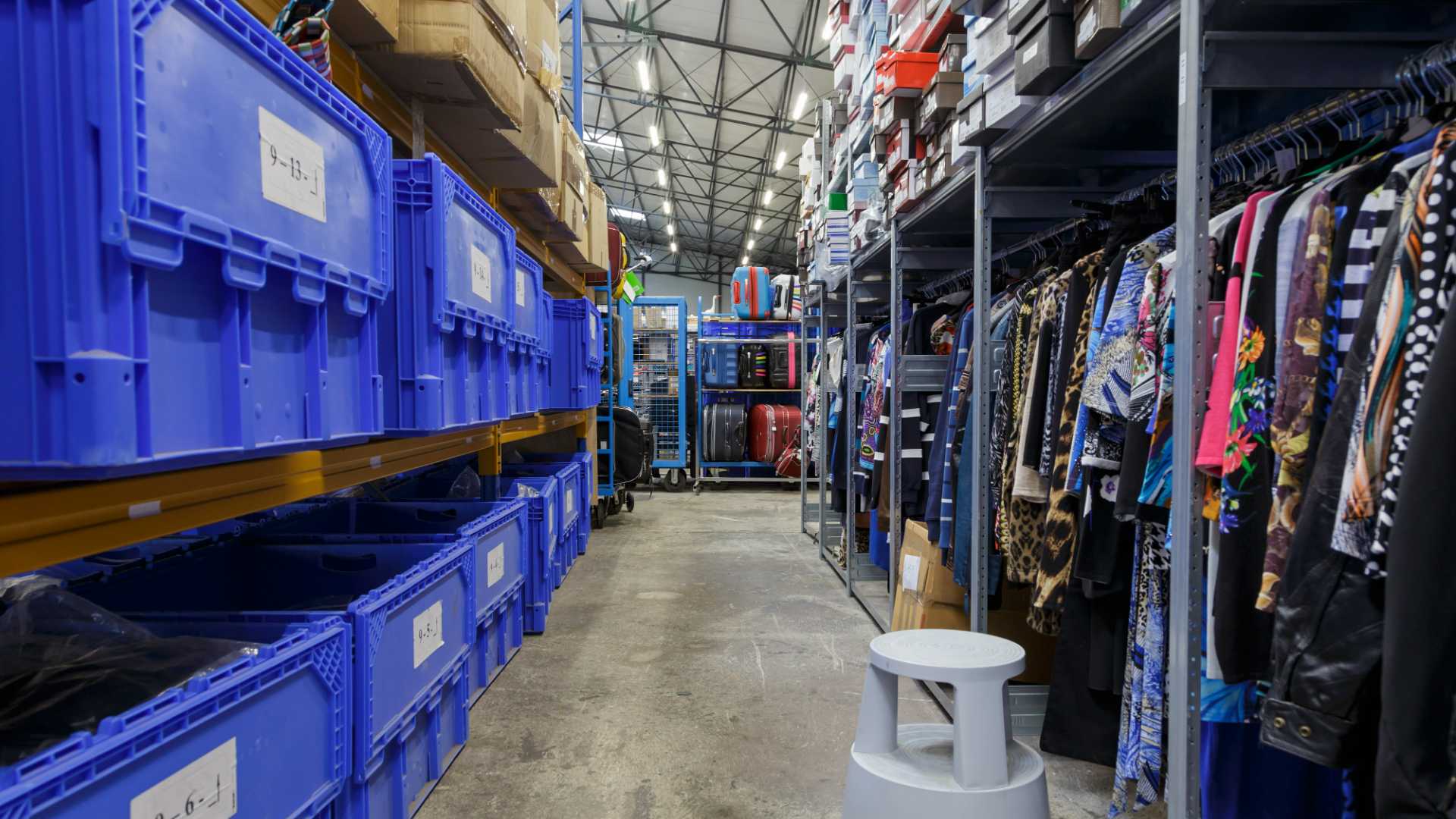
Here's what that looks like in practice: a distribution center the week after a holiday sale, with pallets of returned clothing competing for space against outbound inventory. Inspection queues stretch across the floor. Workers struggle to keep pace with boxes arriving faster than they can be processed. Online fashion return rates now average 30-40% of purchases, and most warehouses weren't designed to handle that volume flowing backward.
Traditional warehouses optimize for one direction: goods move from supplier to customer, and everything else is an afterthought. Returns disrupt that model completely.
-
Unpredictable timing: Returns arrive in waves after holidays and promotions, not on a predictable schedule
-
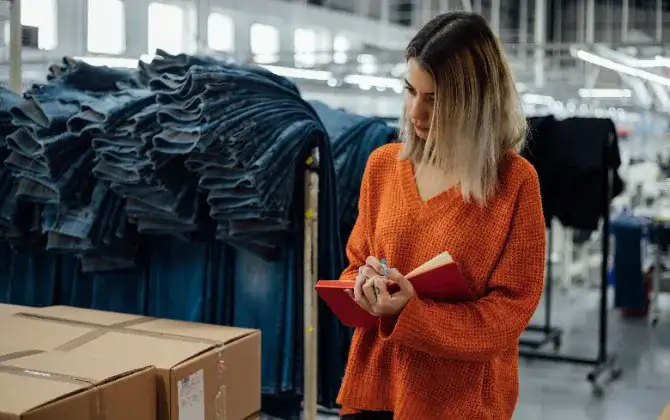
Individual handling: Every garment requires hands-on inspection before anyone can decide what to do with it
-
Space constraints: Returned inventory competes for the same square footage as forward stock
-
Depreciation pressure: A returned winter coat loses value every day it sits unprocessed into spring
What is reverse logistics in circular fashion
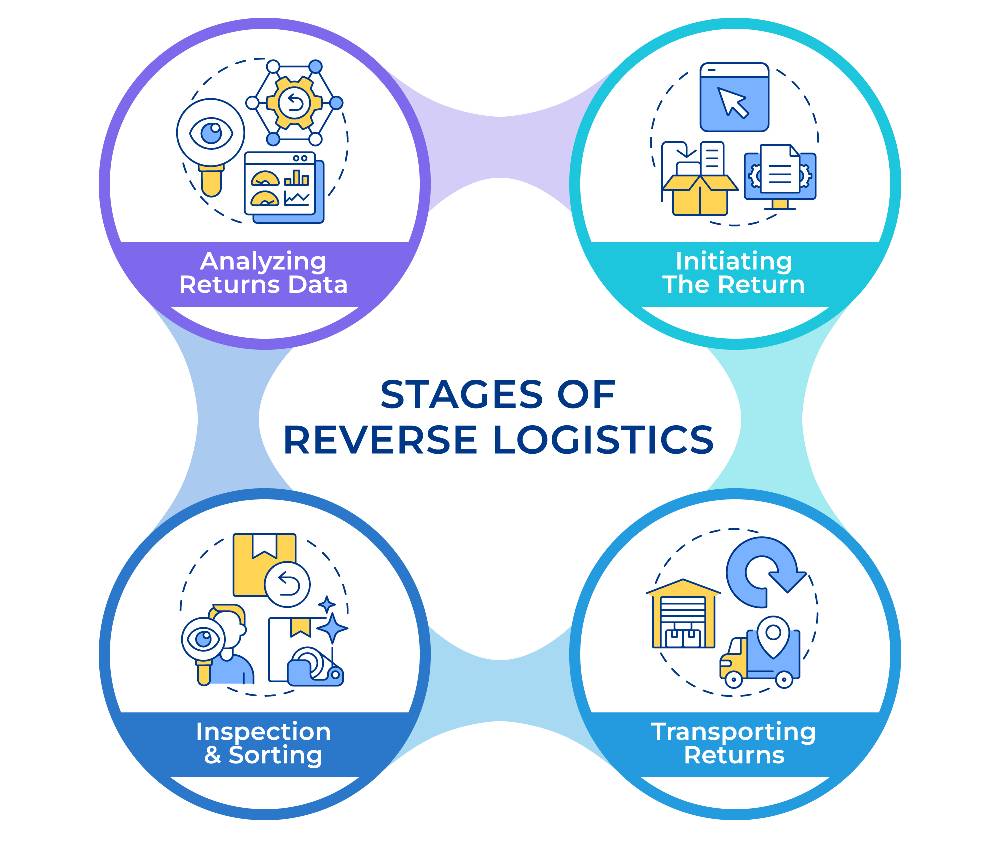
Reverse logistics is the process of moving goods from the customer back through the supply chain for resale, refurbishment, recycling, or disposal. In circular fashion, reverse logistics becomes the operational foundation that keeps garments in use longer rather than flowing toward landfills.
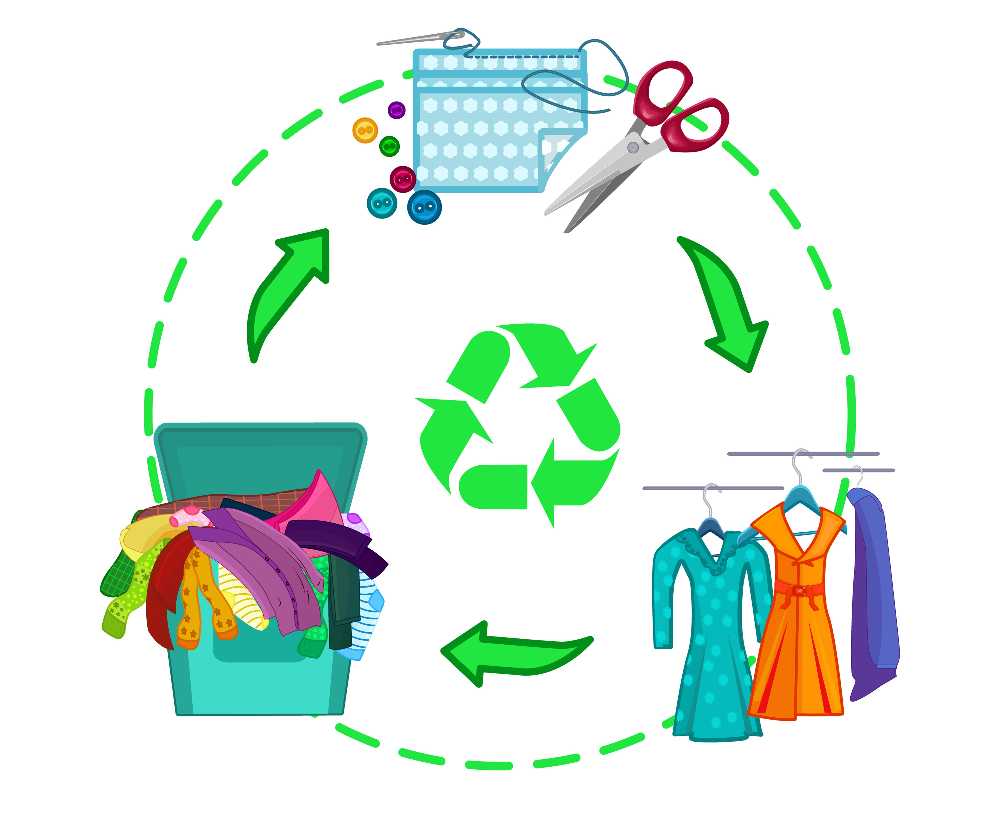
Circular fashion itself represents a shift away from the traditional "make-use-dispose" model. The goal is extending product life through resale, repair, rental, and eventually recycling the materials. Without efficient reverse logistics, circular fashion programs remain more aspiration than reality. You can't run a recommerce program if returned items sit in processing limbo for weeks.
The operational difference is significant:
| Linear Fashion Model | Circular Fashion Model |
| Returns = cost center | Returns = value recovery opportunity |
| Disposition = landfill or liquidation | Disposition = resale, refurbishment, recycling |
| Warehouse handles one-way flow | Warehouse manages bidirectional flows |
| Speed-to-customer focus only | Speed-to-resale equally important |
How sustainable warehousing powers circular fashion
So what does a warehouse actually do differently to support circularity? The short answer: it handles bidirectional flows efficiently while minimizing waste at every step. Sustainable warehousing means designing facilities and workflows that maximize space efficiency and enable multiple disposition pathways for returned apparel.
Consolidating forward and reverse inventory flows
Modern warehouses handling circular fashion can't treat returns as an afterthought relegated to a back corner. Forward fulfillment and returns processing often share the same workstations, the same storage systems, and increasingly, the same robotic infrastructure.
Unified inventory management allows returned items to re-enter available stock quickly rather than sitting in a separate processing area. Goods-to-person systems, for example, can serve both forward picking and returns putaway from identical workstations. The same robot that delivers a tote for order picking can carry a graded return back to storage moments later.
Reducing waste through intelligent storage
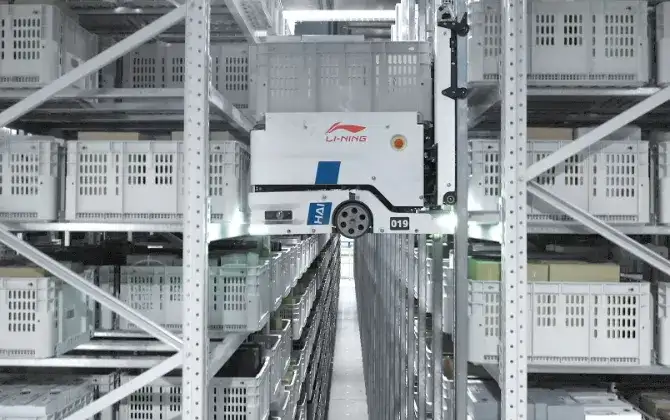
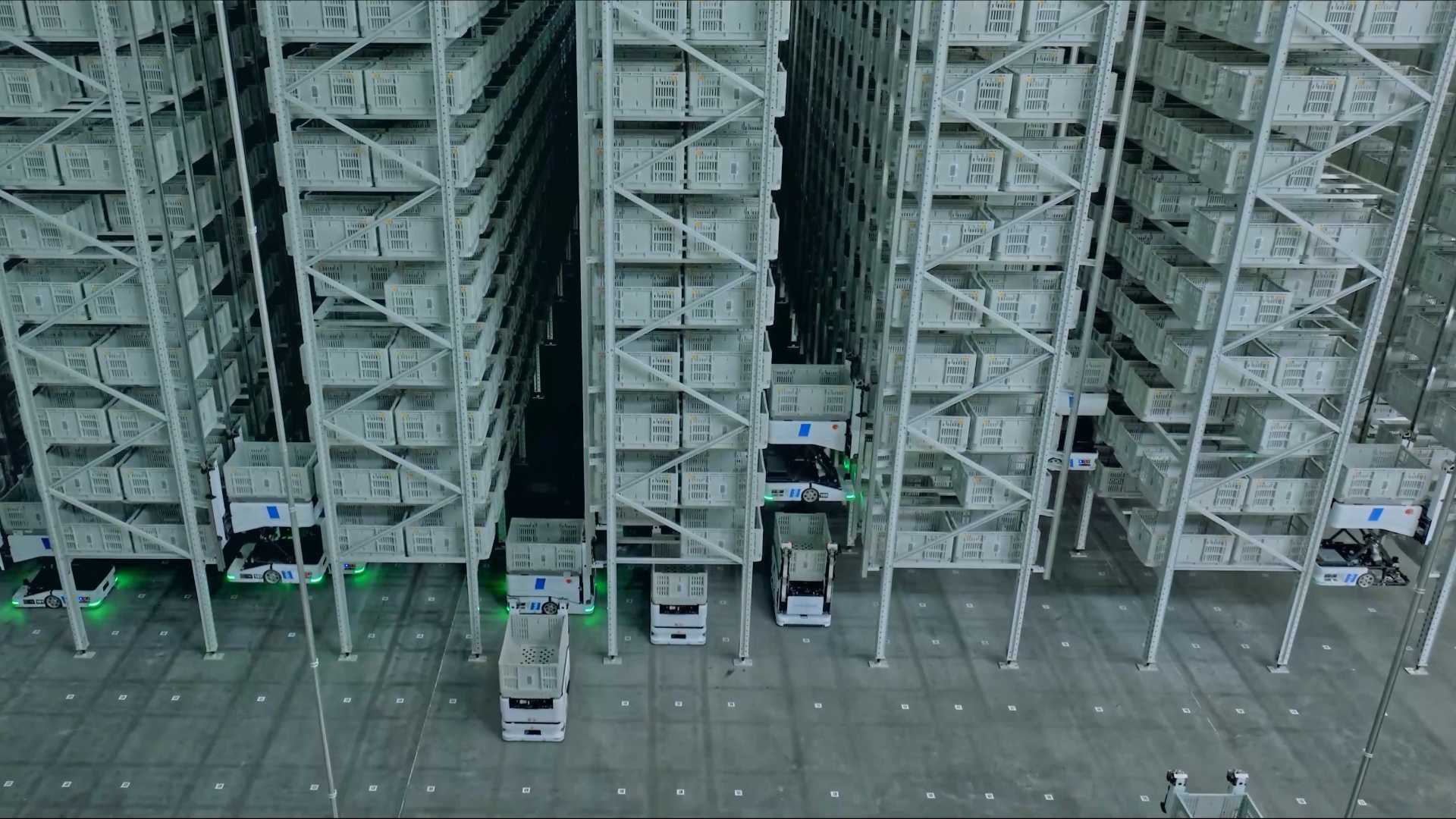
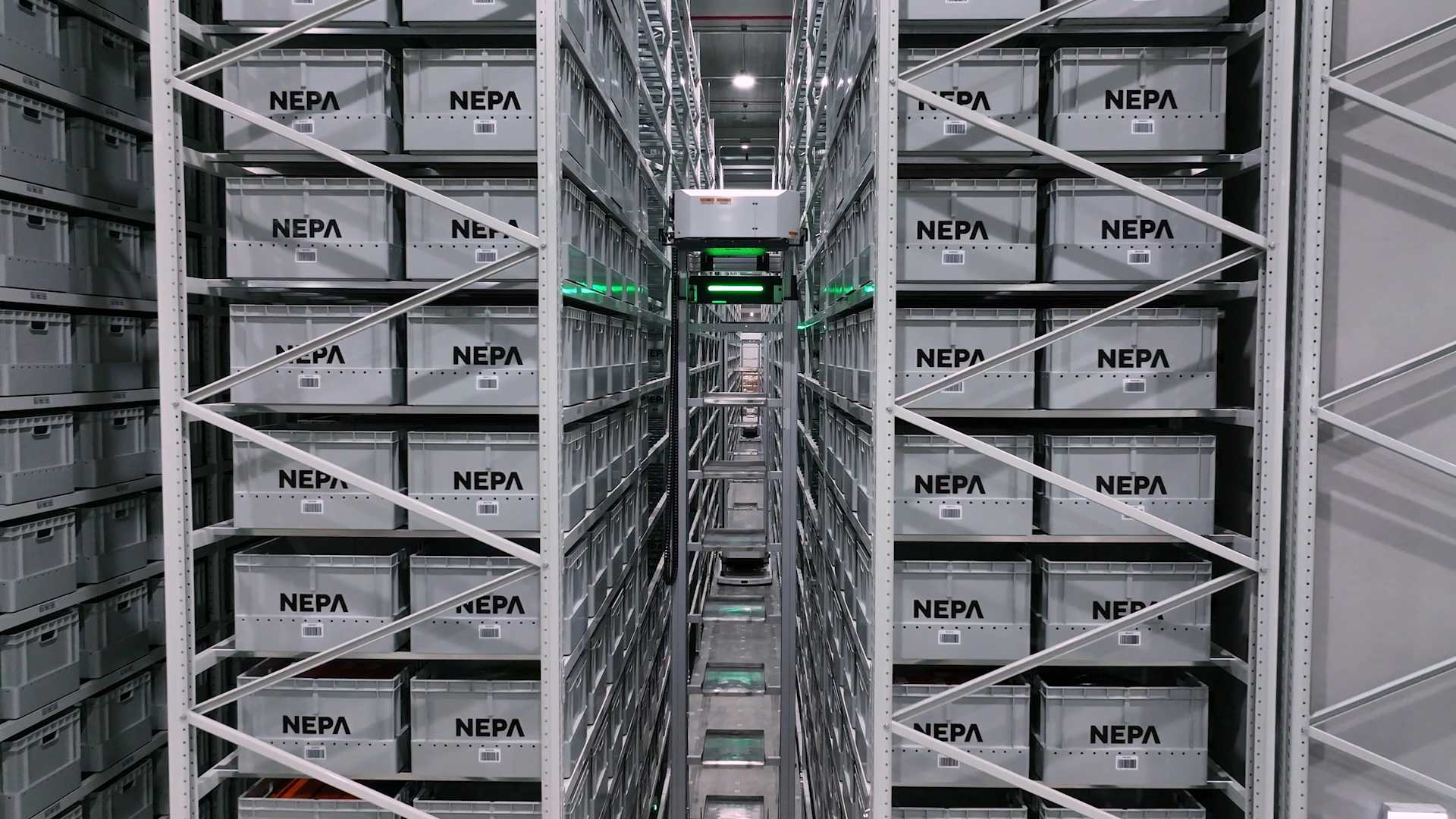
High-density storage solutions directly impact sustainability by reducing the physical footprint required for returns holding areas. Vertical storage with ASRS (Automated Storage and Retrieval Systems) keeps returned garments organized and accessible while cutting energy consumption per stored item.
When you can store more inventory in less space, you free floor area for value-adding activities like refurbishment stations or photography setups for resale listings. A smaller storage footprint also means proportionally less climate control, lighting, and facility overhead.
Supporting resale and refurbishment workflows
Sustainable warehousing accommodates the full range of activities that circular fashion demands: inspection, cleaning, minor repairs, repackaging, and photography for resale channels. Each of these workflows requires flexible space allocation and the ability to route items based on condition.
Automation can deliver returned items directly to the appropriate workflow based on initial grading. A like-new garment routes to photography and relisting. One with a missing button routes to refurbishment. One beyond repair routes to textile recycling. Minimizing handling touches at each step accelerates time-to-resale and reduces labor cost per item.
Key drivers of sustainable reverse logistics for apparel
What factors determine whether your reverse logistics operation recovers value or hemorrhages cost? Several capabilities directly influence outcomes, and each one deserves consideration in warehouse design and technology selection.
Returns volume and velocity management
Apparel returns arrive unpredictably and in surges, particularly post-holiday, end-of-season, and after major promotions. A warehouse designed only for steady-state volume will struggle during peaks, creating backlogs that delay processing and erode item value.
Flexible automation absorbs volume spikes without requiring proportional labor increases. Scalable robotic systems can expand modularly as return volumes grow, and the same robots handle both peak and normal periods without the hiring and training cycles that manual operations require.
Product condition assessment and grading
Every returned garment requires evaluation before disposition. Grading categories typically include:
-
Like-new: Immediately resalable without any work
-
Minor defect: Requires cleaning or minor repair
-
Refurbishment needed: More significant work before resale
-
Recycle-only: Beyond economic repair
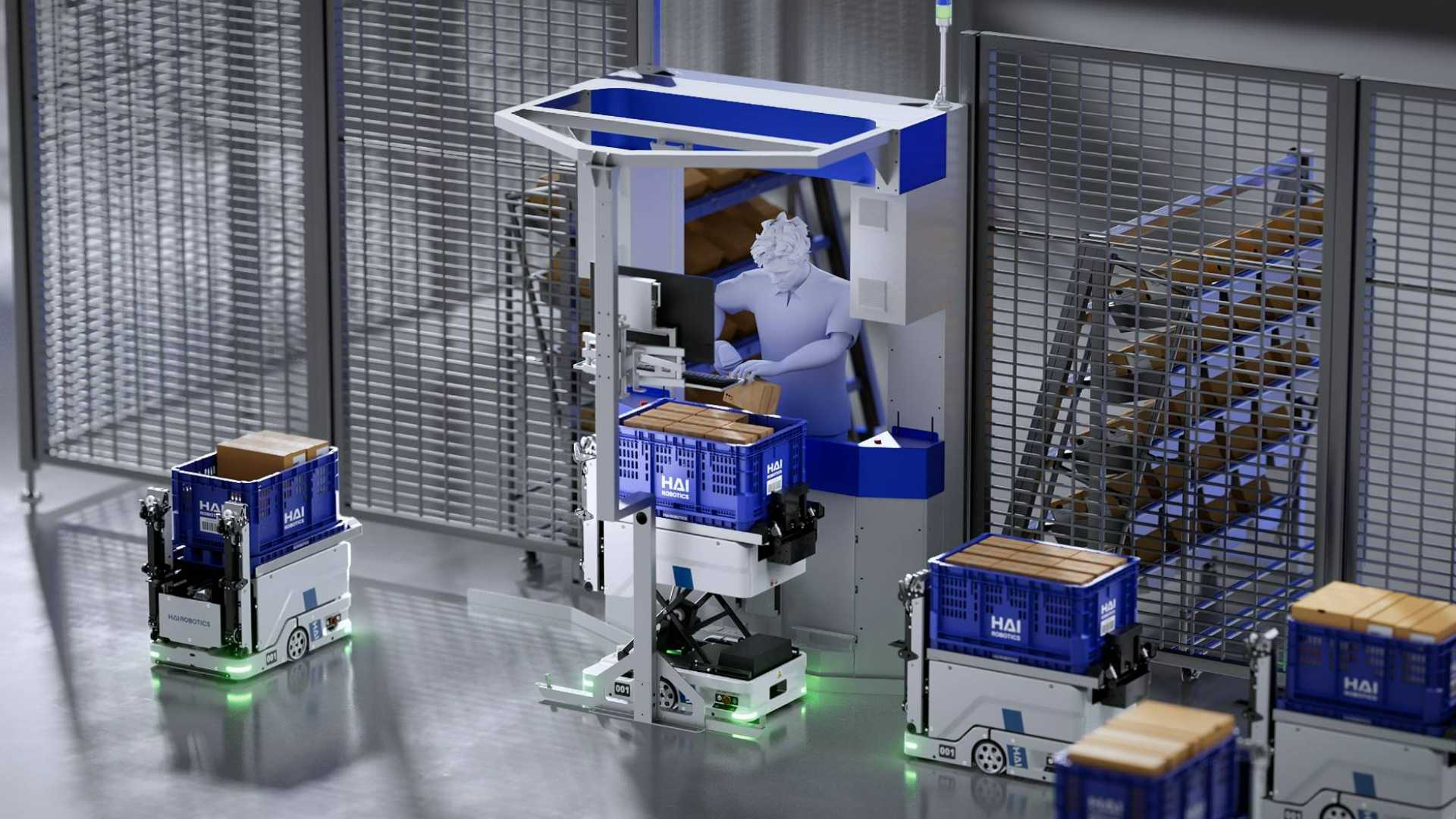
Workstation design directly affects grading speed and accuracy. Ergonomic goods-to-person stations that bring items to workers, rather than requiring workers to walk to items, enable faster and more consistent assessment. When workers aren't fatigued from travel, grading quality improves.
Disposition routing and channel integration
Once graded, items flow to their next destination: primary resale, outlet channel, third-party reseller, donation partner, or recycling facility. Each pathway has different requirements for packaging, documentation, and timing.
WMS (Warehouse Management System) integration enables automatic routing based on item attributes and channel rules. The system knows that a Grade-A dress routes to the primary e-commerce channel while a Grade-B version of the same item routes to the outlet store, with no manual decision required.
Storage density and space utilization
Returns require holding space while awaiting processing and disposition. In many facilities, this holding area becomes a bottleneck that limits overall throughput.
High-density racking with robotic retrieval maximizes usable space, often achieving 3-4x the storage locations per square meter compared to manual shelving. This density frees floor area for the value-adding activities that circular fashion demands. Instead of dedicating half your warehouse to returns holding, you might need only a quarter, leaving room for refurbishment stations, photography areas, or additional outbound capacity.
Labor efficiency and ergonomics
Returns processing is inherently labor-intensive because each item requires individual handling and judgment. Unlike forward fulfillment where you might pick the same SKU repeatedly, returns present constant variety.
Goods-to-person automation eliminates travel time and brings items to ergonomic workstations. Workers focus on inspection and decision-making, tasks that benefit from human judgment, while robots handle the repetitive transport. The result is often 3-4x higher throughput per worker with reduced physical strain.
Data visibility and real-time inventory tracking
Circular fashion requires knowing exactly what inventory exists, where it sits, and in what condition. Without this visibility, you can't make informed decisions about pricing, channel allocation, or process improvement.
Integrated WMS/WES platforms provide real-time visibility into returns status at every stage. You can see how many items await grading, how long they've been waiting, and where bottlenecks are forming. This data enables faster decision-making and continuous improvement.
Warehouse automation technologies for reverse logistics apparel
What technologies enable the sustainable reverse logistics capabilities described above? Several categories of automation address different aspects of returns processing.
Goods-to-person systems for returns processing
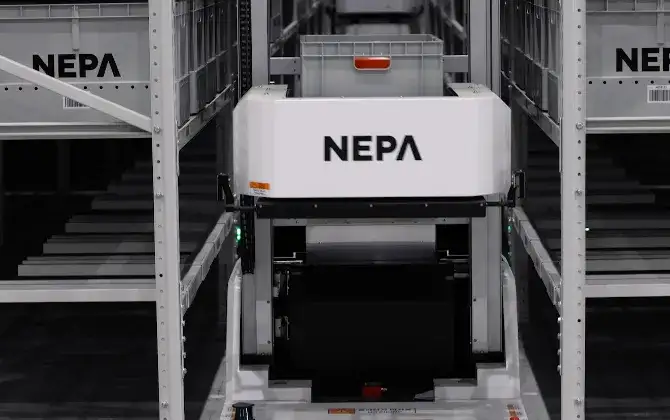
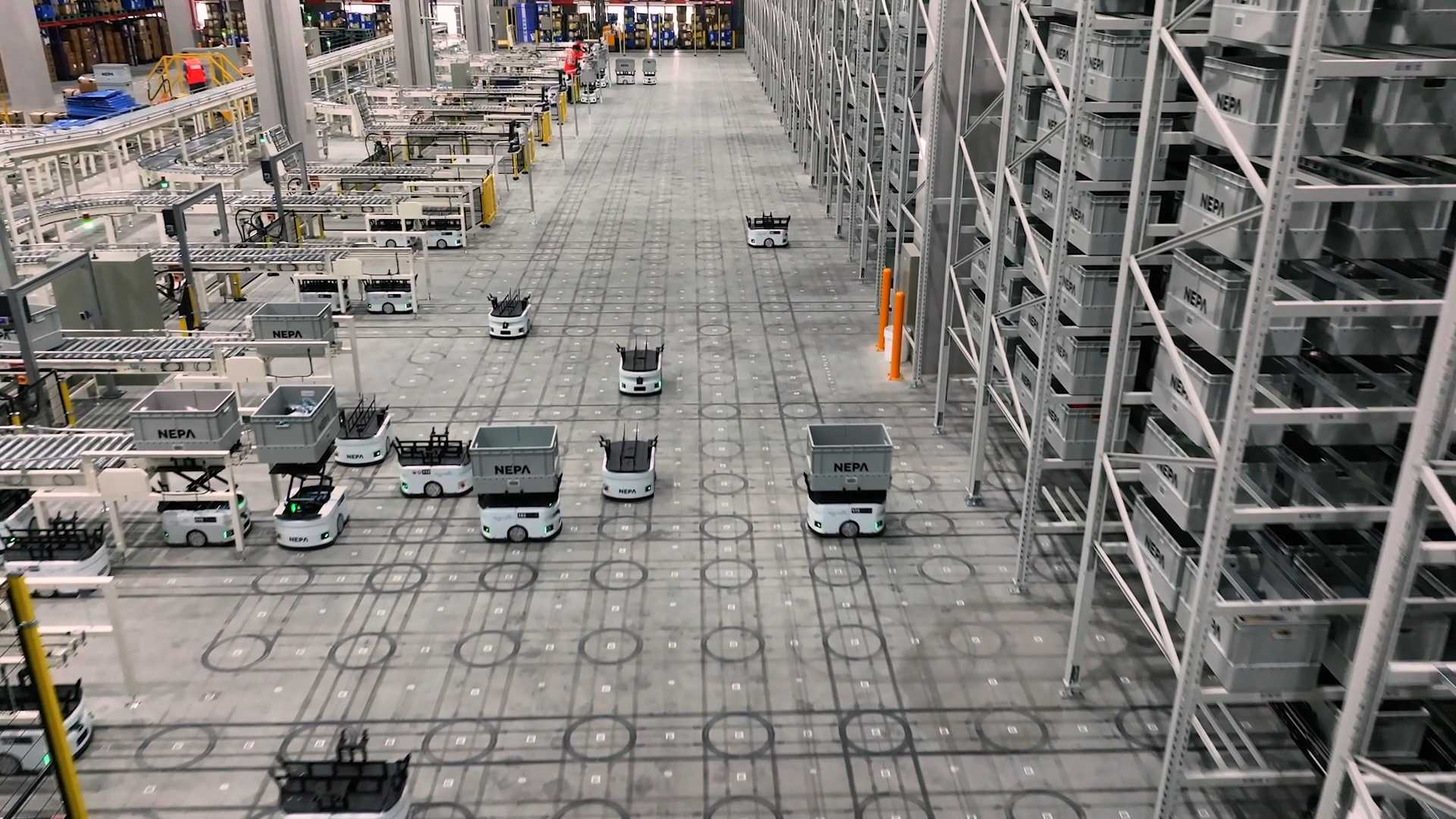
Goods-to-person (G2P) automation brings inventory to stationary workers rather than requiring workers to walk to inventory. ACR (Autonomous Case-handling Robot) systems retrieve totes of returned items and deliver them to processing workstations, then return graded items to storage or route them to outbound lanes.
This approach supports both high-volume returns receiving and individual item inspection. The same workstation that processes 50 returns per hour can also pick 50 orders per hour. The robots simply deliver different totes based on current priorities.
Tip: When evaluating G2P systems for returns, look for solutions that handle both forward and reverse flows from the same infrastructure. Dedicated returns-only automation often sits idle during low-return periods.
Autonomous mobile robots for flexible handling
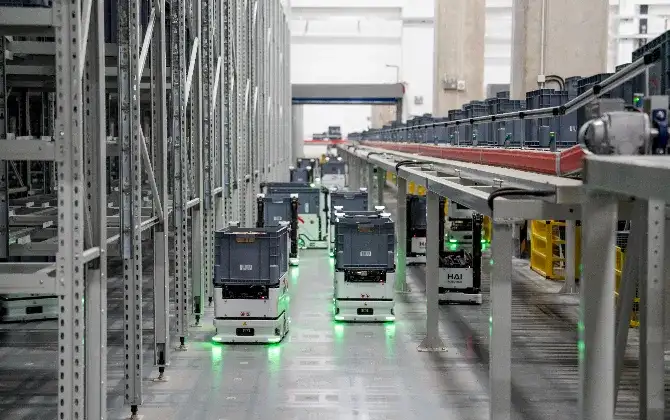
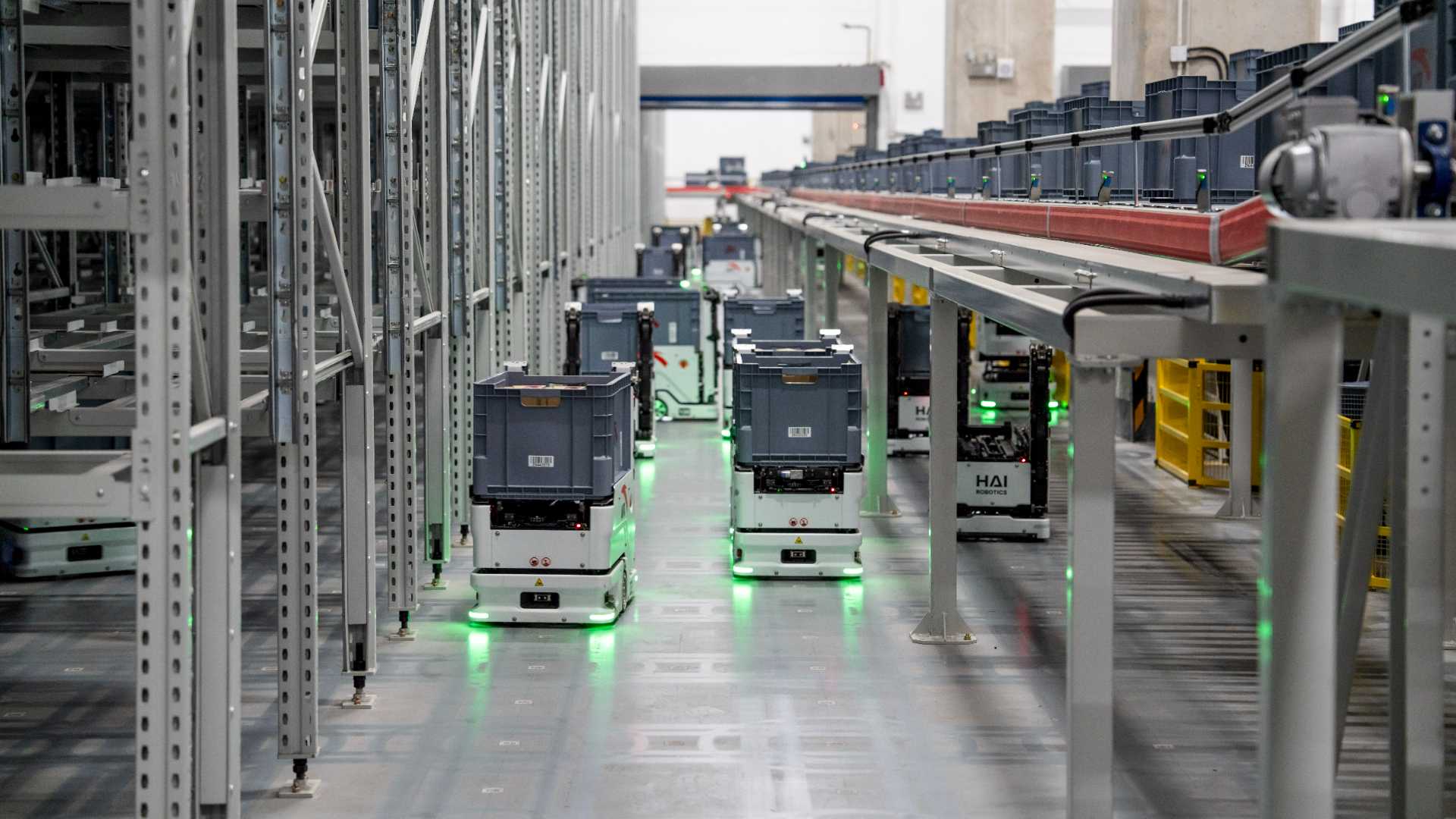
AMRs (Autonomous Mobile Robots) transport items between zones, moving goods from receiving to inspection, from inspection to storage, and from storage to outbound staging. Unlike fixed conveyor infrastructure, AMRs adapt to changing workflows and facility layouts.
This flexibility matters for circular fashion operations where workflows evolve as resale programs mature. You might start with simple resale and later add refurbishment capabilities. AMRs can accommodate new routing patterns without infrastructure changes.
WMS and WES integration for returns visibility
Software integration ties the physical automation to business logic. HaiQ and similar warehouse execution platforms integrate with existing WMS to orchestrate robotic workflows, track item-level status through the returns process, and provide real-time operational insights.
This integration captures the data needed to measure and improve sustainable reverse logistics performance. You can track metrics like average time-to-resale, grading accuracy, and recovery rate by category, then use those insights to optimize processes.
How to build a circular-ready warehouse for fashion returns
If you're planning to upgrade reverse logistics capabilities, a structured approach helps ensure the investment delivers results. The following steps provide a framework for operations leaders evaluating automation options.
-
Assess current returns flow: Map your existing process to identify bottlenecks, manual touchpoints, and space constraints. Where do items wait longest? Where do errors occur?
-
Define disposition pathways: Clarify the channels your returns will flow to, whether resale, refurbishment, or recycling, and estimate volume requirements for each. This shapes capacity planning.
-
Evaluate automation fit: Consider goods-to-person systems that can flex between forward fulfillment and returns processing. Dual-purpose infrastructure improves utilization and ROI.
-
Plan for modularity: Select systems that can start small and scale as circular fashion programs grow. A pilot zone validates performance before broader rollout.
-
Integrate data systems: Ensure WMS/WES connectivity to capture the visibility needed for continuous improvement. Without data, you can't measure progress.
The transition from linear to circular fashion logistics doesn't happen overnight, but the operational foundation starts with warehouse capabilities. Flexible, high-density automation positions your operation to recover more value from returns while supporting sustainability goals.
Learn more about HaiPick Systems
FAQs about reverse logistics in circular fashion
1. How long does it typically take to deploy warehouse automation for apparel returns processing?
Deployment timelines vary based on facility size and system complexity. Modular goods-to-person solutions can often be implemented in phases, with initial go-live in months rather than years. Starting with a pilot zone allows operations to validate performance before scaling.
2. At what point does it make sense to invest in reverse logistics automation?
Brands experiencing rising return volumes, labor constraints, or space limitations typically see strong ROI from automation. This is particularly true when returns processing creates bottlenecks that delay time-to-resale. If manual handling limits your ability to support resale or circular programs, automation merits evaluation.
3. Can existing warehouses be retrofitted for circular fashion workflows?
Yes. Modern goods-to-person systems work with standard racking and adapt to existing facility layouts without requiring complete rebuilds. This retrofit-friendly approach makes it practical to add reverse logistics automation to brownfield sites already handling forward fulfillment.
4. How do automated systems handle the variability of returned apparel items?
Goods-to-person systems deliver returned items to ergonomic workstations where human operators perform condition assessment and grading. The automation handles storage, retrieval, and routing while workers focus on inspection and decision-making. This approach combines efficiency with human judgment for variable tasks.