Safety in Warehouse Automation Goes Beyond the Robot
Warehouse automation safety used to be discussed mainly in terms of machine guarding, emergency stops, and collision avoidance. Those safeguards remain essential, but modern automated warehouses are more connected, more densely utilized, and more dynamic than before. People enter automated areas for inspections and maintenance, robots move continuously through shared traffic networks, lithium batteries cycle through charging and operation, and warehouse software exchanges data with enterprise systems around the clock.
As these interactions increase, safety can no longer be treated as a checklist attached to a single machine. It has to be considered across the operation, from how risks are detected and assessed to how people enter automated areas, how fire protection is coordinated with the building, and how connected systems remain secure and available.
Safety Has to Respond to a Changing Warehouse
A warehouse is never completely static. People move between work areas, traffic patterns shift as order volumes change, equipment conditions evolve, and operating priorities are constantly adjusted. A route that is clear at one moment may be congested the next, while a maintenance task can temporarily change how part of the system needs to operate.
This is why effective safety depends on more than fixed safeguards. The system also needs to sense changing conditions, assess what those changes mean, and respond appropriately. Equipment and traffic status, battery condition, and the presence of people in controlled areas can all contribute to that picture. Based on those conditions, the system can adjust routes, operating behavior, or equipment status to reduce risk before a situation becomes more serious.
This Sense. Assess. Respond. approach connects different safety measures into one operating logic. It turns safety from a collection of isolated features into a continuous process that adapts as warehouse conditions change.
People and Robots Need Protection at More Than One Level
Physical separation remains one of the most fundamental principles of warehouse automation safety. During normal operation, safety fencing and other safeguards create a clear boundary between personnel areas and robot operating zones. But real warehouses also require inspections, maintenance, troubleshooting, and exception handling, which means people may occasionally need to enter controlled areas.
That is why personnel safety needs multiple layers. At the perimeter, physical safeguards help prevent unintended access. At access points, interlocked doors connect personnel entry with equipment status so that affected equipment stops automatically when someone enters a controlled area. Inside the automated area, dynamic personnel protection can add another layer for necessary maintenance work.
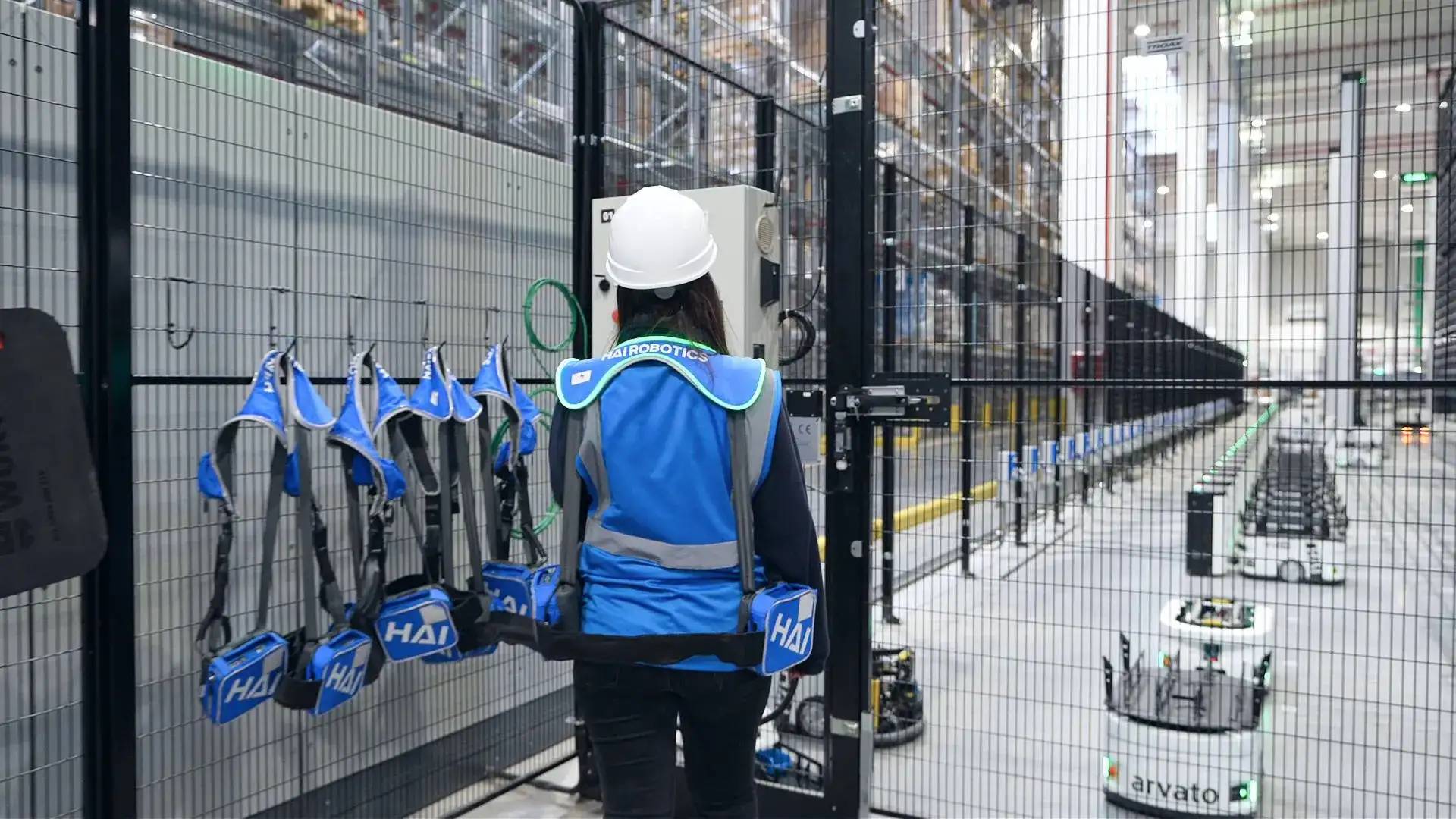
With HaiVest, nearby robots can detect maintenance personnel and respond according to safe separation distances by adjusting their movement, slowing down, or stopping when required. The objective is not only to protect people, but also to minimize unnecessary disruption to the wider operation.
Fire Safety Starts Before an Alarm
Fire safety in an automated warehouse begins long before smoke is detected. Lithium batteries, charging infrastructure, and high-density vertical storage all create considerations that need to be addressed from the planning stage rather than added later as separate measures.
Prevention starts with the equipment itself. Validated battery solutions, battery-condition monitoring, and charging protection help identify abnormal temperature, voltage, or current conditions early and reduce risks such as overheating or overcharging. At the facility level, racking, charging areas, robot traffic routes, and emergency access need to be planned together with the building’s fire-protection strategy.
Automation also needs to work with the wider facility response. Depending on the project, the HaiPick System can integrate with fire alarms, smoke detection, and sprinkler systems. When an alarm occurs, operations can pause and robots can move clear to help keep emergency access routes open. Relevant requirements and industry guidance, including applicable NFPA requirements and FM Global guidance, should therefore be considered from the early stages of system planning.
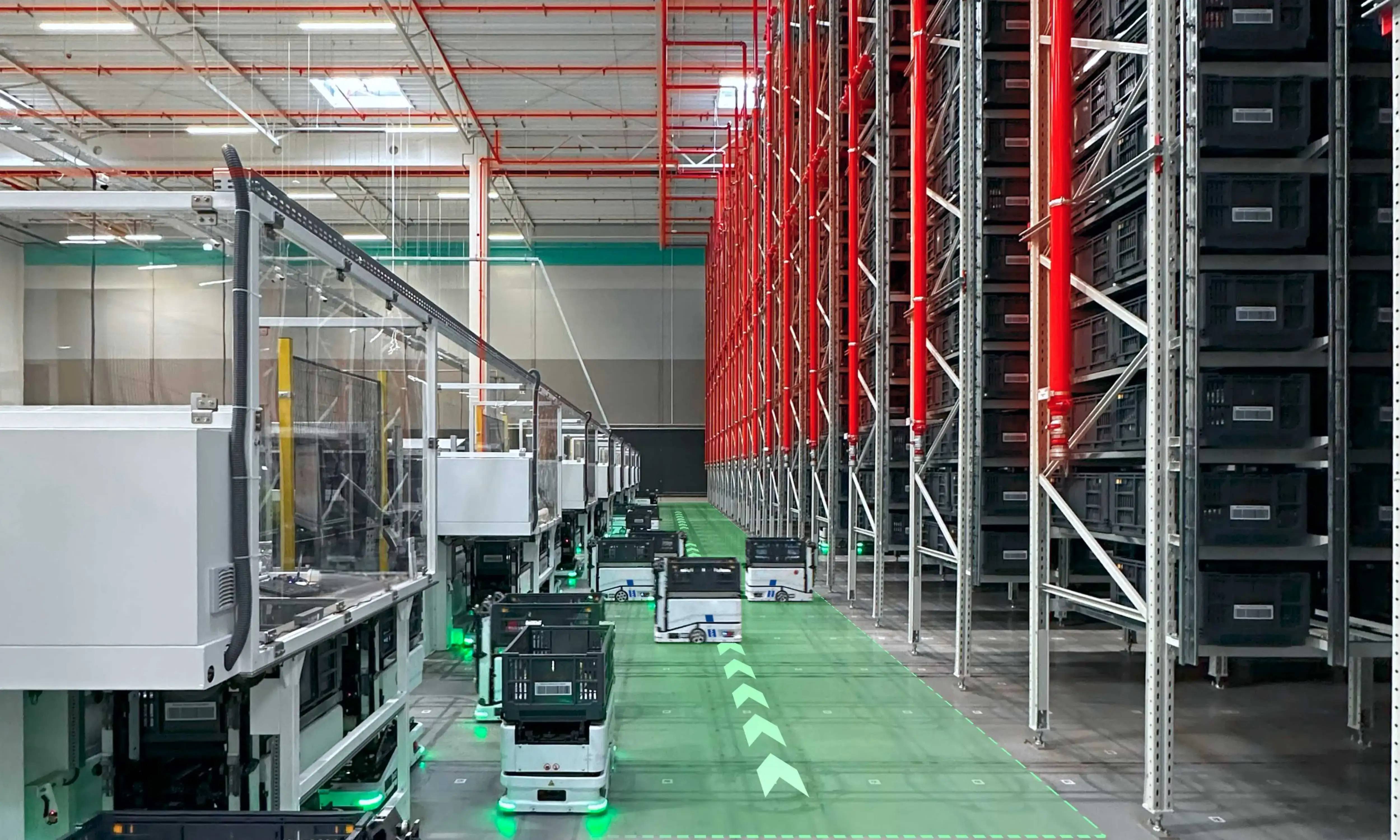
When an incident does occur, response and recovery matter just as much as prevention. Clear support processes for events such as fire-related incidents, power loss, or equipment failure help identify the issue, contain its operational impact, and support a safe return to operation.
Connected Automation Extends the Safety Boundary
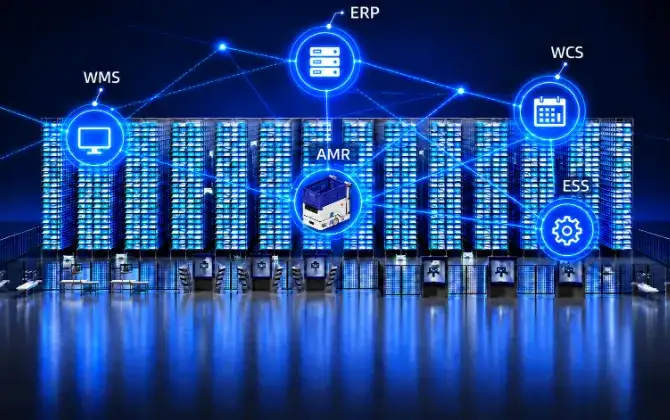
As warehouse automation becomes more connected, the safety boundary no longer ends at the physical fence. Robots connect to warehouse software, warehouse software connects to enterprise systems, and operational data continuously moves between devices, applications, and networks. That makes system and information security part of the broader operational safety picture.
For warehouse operators, the practical questions are straightforward: can critical operations remain stable when a network or system issue occurs, who has access to different system functions, how is business data protected, and how does that protection stay current as new vulnerabilities emerge?
These questions require several layers of protection. Encrypted communications and system stability measures help reduce the impact of network disruption and system exceptions. Role-based access helps match permissions to user responsibilities, while key actions can be recorded and traced. Data protection needs to cover transmission, storage, and use, with options such as encryption and local deployment helping reduce unnecessary external data movement.

Security also cannot remain static. Ongoing vulnerability monitoring, remediation, and system updates are needed to reduce exposure to known risks and address newly identified issues quickly. In a connected warehouse, a cybersecurity issue is not only an IT concern if it can affect system availability, access, or fulfillment continuity.
Safety Should Support Performance, Not Compete with It
Safety and productivity are sometimes treated as opposing priorities, as if stronger protection must automatically mean more stops, more restrictions, and lower throughput. Mature automation should aim for a different outcome: reducing risk while avoiding unnecessary disruption to operations.
That may mean limiting the impact of maintenance to the relevant area rather than stopping the entire system. It may mean identifying changing conditions early enough to prevent a larger interruption. It may also mean having clear emergency-response processes so abnormal events can be contained and operations restored in a controlled way.
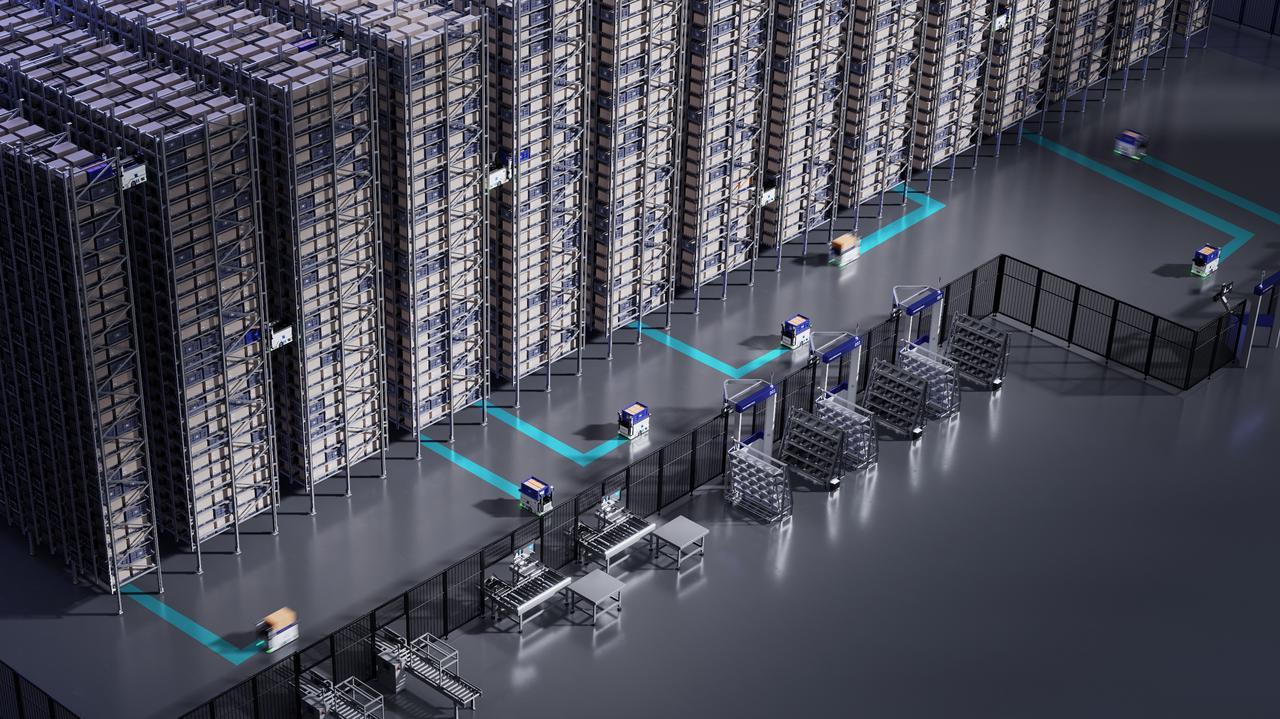
The business value of safety therefore goes beyond incident prevention. It can help reduce unnecessary interruptions, lower exposure for people, equipment, and inventory, maintain more stable fulfillment during peak periods, and give operations greater confidence as automation expands.
The goal is not to choose between safety and performance. It is to build operations where safety supports performance.
Safety. Always On.
Warehouse automation is becoming more capable, more connected, and more deeply embedded in daily operations. Its approach to safety has to evolve with it.
Hai Robotics brings together people and equipment safety, fire and emergency protection, and system and information security through a layered approach designed to reduce risk while supporting stable, continuous operations.