




Tech Blog 1 - Breaking the Throughput Ceiling: A New Architecture for High-Throughput Fulfillment
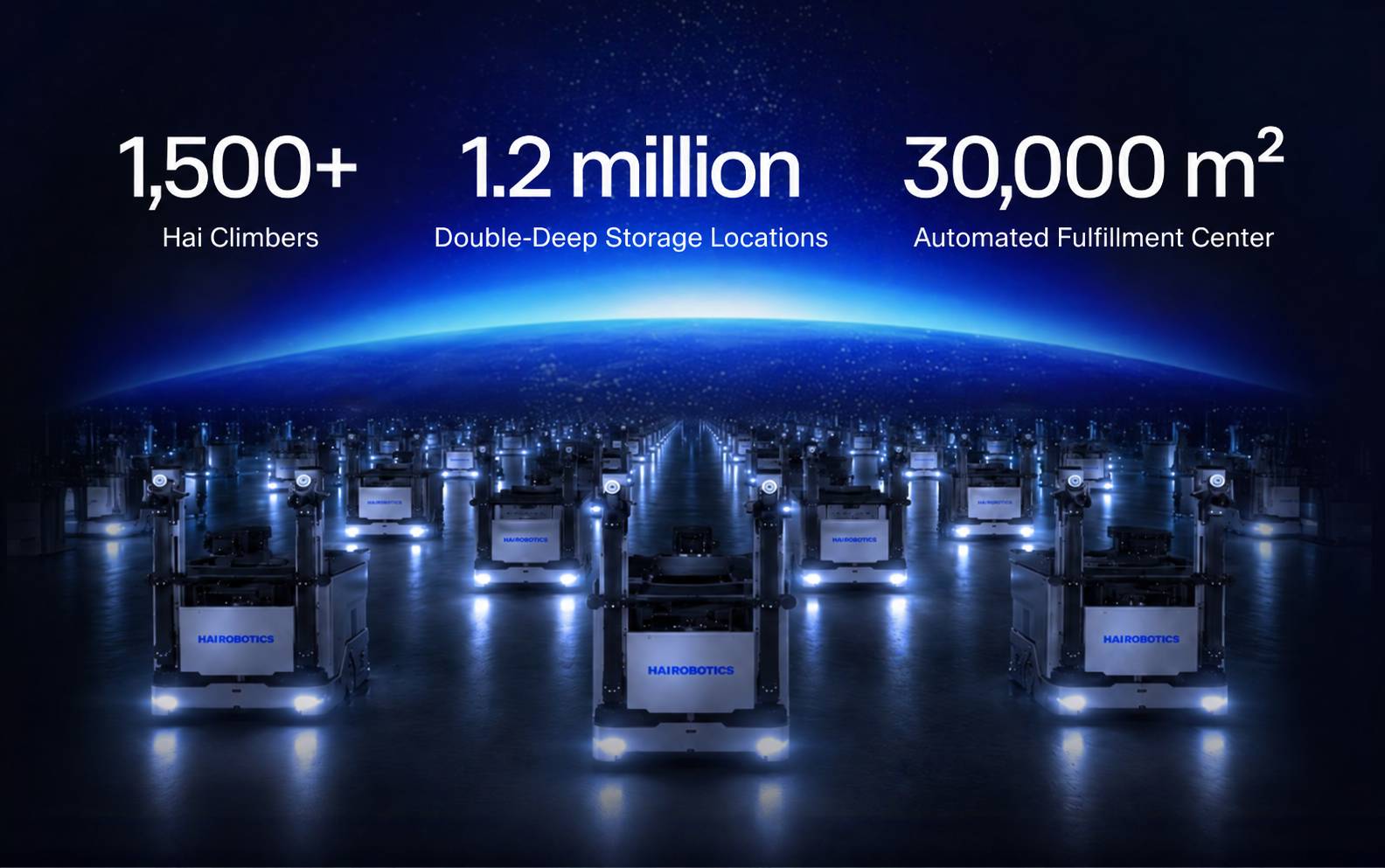
LPP Logistics, one of Europe's leading fashion logistics operators and a returning Hai Robotics customer, is taking warehouse automation to an entirely new scale.
At its new fulfillment center in Tczew, Poland, more than 1,500 HaiPick Climb robots will operate within a single integrated system, supporting 1.2 million storage locations and a designed throughput of more than 24,000 totes per hour.
But delivering performance at this scale requires more than adding robots. It demands a different approach to system architecture, fleet orchestration and fulfillment operations.
In this three-part technical series, we take you behind the engineering of this landmark project, exploring the challenges of high-throughput e-commerce fulfillment and the technology designed to overcome them.
In this first article, Breaking the Throughput Ceiling, we explore how an integrated rack-climbing architecture can unlock higher throughput without introducing the same level of system complexity.
When Density Is No Longer the Hardest Problem
For LPP Logistics, the challenge is not simply to automate a storage area of approximately 30,000 sqm. The new system is designed to consolidate inventory from the manual warehouse and support a multi-brand e-commerce fulfillment operation handling multiple inbound flows, including high volumes of returns. It must provide sufficient throughput capacity for future growth while keeping processes simple, lead times short and operational dependencies manageable as the operation scales.
At this scale, performance depends not only on how fast individual robots move, but on how storage access, tote transport and robot traffic are organized across the system. As more robots and more throughput are added, every handover, fixed resource dependency and traffic constraint can become a limit on how much productive capacity the system can actually unlock.
That made choosing the right system architecture even more critical.
The Architecture That Raises the Performance Ceiling
HaiPick Climb simplifies the tote journey by combining storage retrieval and horizontal transport in a single robot. The significance of rack-climbing robotics, therefore, lies not simply in putting a robot on a rack. It lies in integrating storage access and horizontal transportation into one simplified robotic architecture.
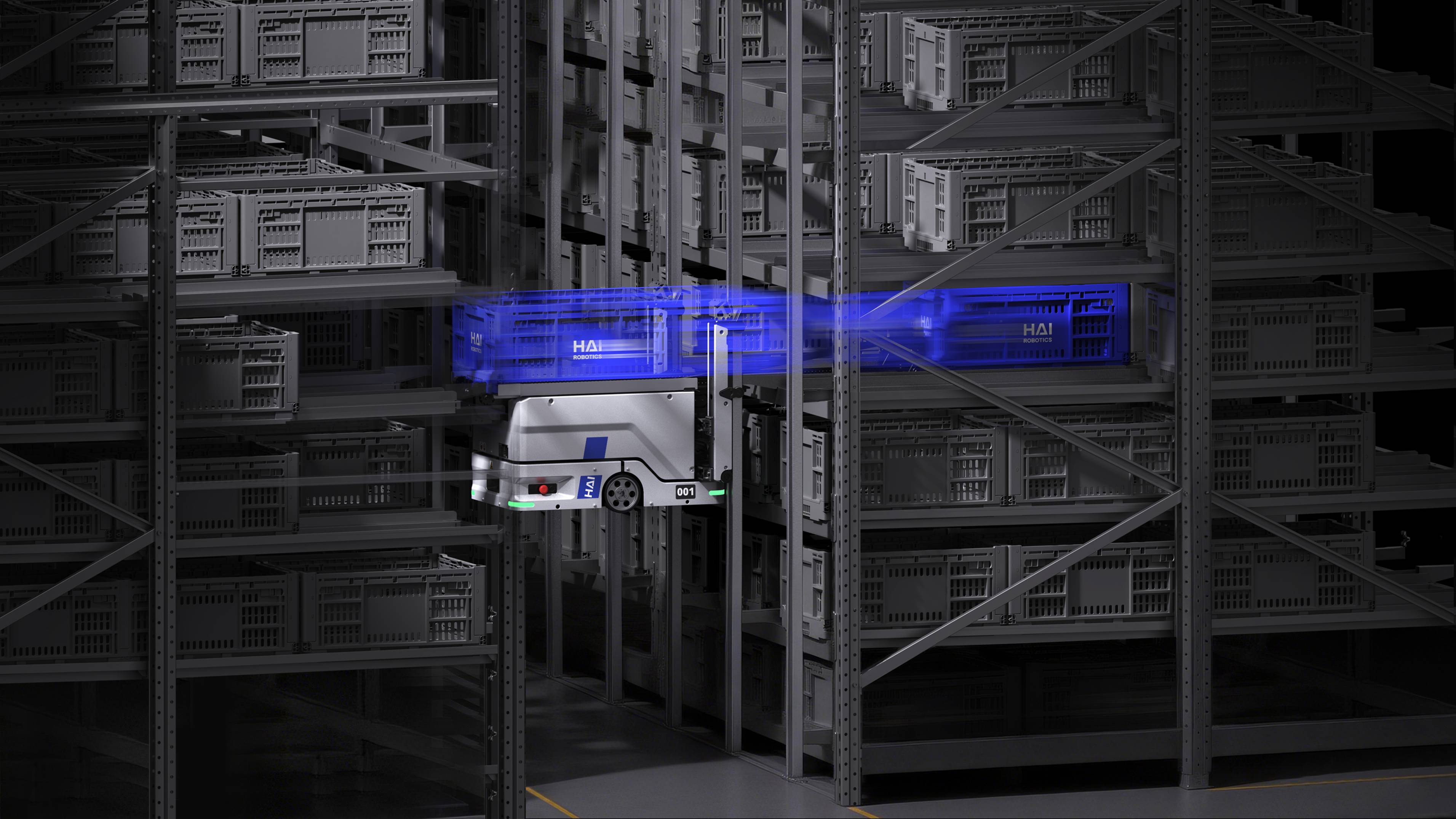
What if the storage area itself could also become the traffic network?
|
Dual-robot architecture |
Integrated rack-climbing architecture |
|
Vertical retrieval and horizontal transport are handled by separate robot fleets, creating handovers and interdependencies. |
One robot handles both vertical retrieval and horizontal movement, reducing handovers, mismatches and robot-to-robot dependencies. |
|
Traffic capacity depends more heavily on dedicated pathways, aisle switching and buffer coordination. |
Free-roaming movement beneath the racks expanding available routing capacity. |
|
Scaling performance therefore requires coordination across multiple resource layers. |
Flexible x-y movement reduces dependence on dedicated highways and allows robot capacity to shift across aisles as demand changes. |
Together, these architectural differences create more headroom across multiple dimensions - how many robots can operate productively within a given footprint, how much throughput the system can generate from that footprint, and how efficiently performance can be maintained under demanding operating conditions.
Specifically, in simulation and real projects we found that HPC enables:
-
More room to grow within the same footprint. As demand increases, HPC can add more productive robot capacity within the existing system, creating more headroom to scale performance without immediately expanding the footprint.
-
Performance that scales more effectively with the operation. As the system grows, HPC maintains higher throughput density, allowing capacity to expand more efficiently with larger operations.
Orchestrating the Flow behind Every Tote
So, what does it take to move more than 24,000 totes per hour in this deployment?
Architecture is only half the story. When hundreds - or even thousands - of robots operate in the same system, software must continuously decide what should move, where it should go and when. Inventory has to be positioned intelligently, the right totes need to reach the right workstations at the right time, priorities need to be managed, traffic has to be balanced and resources must be reassigned as conditions change.
Most of this happens invisibly to the operator. But it is what turns a large robot fleet into a coordinated fulfillment system.
-
Step 1 - Plan the Flow
Shape the route before robots move.
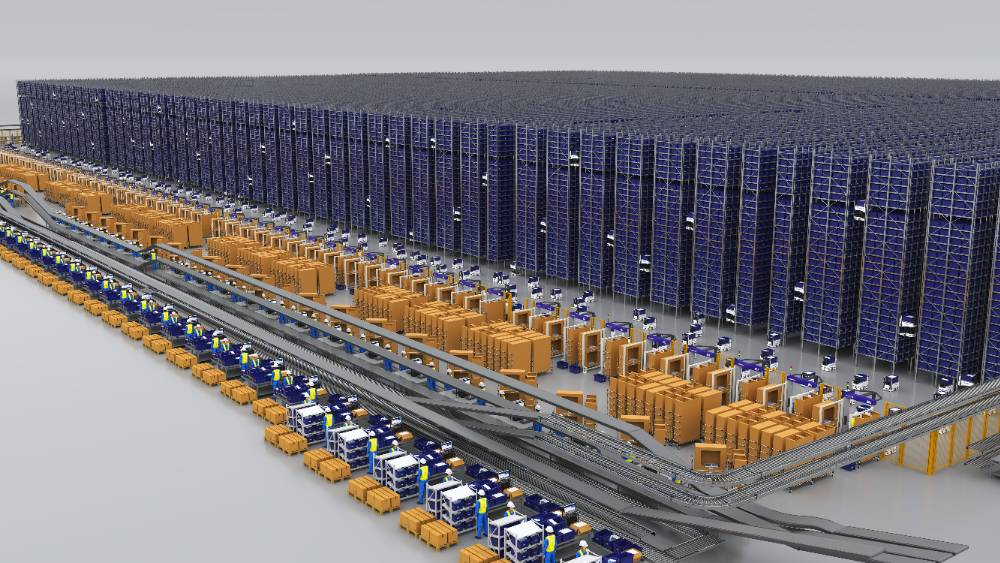
Optimized matching keeps most orders within the same half of the storage area, reducing unnecessary long-distance travel. At the same time, advance task planning helps sequence work around the existing put-wall setup, adapting to changes in order mix without repeated physical reconfiguration.
-
Step 2 - Adapt the Flow
Maintain productivity as demand shifts.
-
In dual-robot architectures, transport efficiency often improves when more tasks are released at the same time. A denser task pool gives robots more opportunities to pick nearby work, reducing average travel between tasks. The downside is that larger task pools can delay order completion, creating a trade-off between robot efficiency and order lead time.
-
That trade-off becomes more visible toward the end of a wave, when fewer tasks remain and they are more dispersed. With less nearby work available, travel between tasks increases and efficiency starts to fall.
-
For the operation, this means a more continuous and predictable tote flow without having to choose between high robot efficiency and fast order fulfillment. HPC can keep feeding workstations efficiently even as task density falls, helping maintain short order lead times and stable performance towards the end of each wave.
-
Dual put walls and FIFO prioritization then help smooth the transition between task sets, allowing the next task set to take over with minimal interruption.
-
-
Step 3 - Coordinate the Flow
Balance traffic across a vast robot fleet.
With 1,500+ robots sharing the same traffic network, efficient routing depends on more than choosing the shortest path. Designed to orchestrate thousands of robots within a single fleet, Hai Robotics' software coordinates both where and when each robot moves, resolving potential conflicts before they occur and dynamically redistributing traffic away from emerging hotspots. Routes can be recalculated in milliseconds as conditions change, helping prevent congestion and maintain smooth robot flow, even at this scale.
Built for the Realities of E-Commerce
These architectural advantages become particularly valuable in e-commerce, where large SKU assortments, shallow order profiles, high return volumes and rapidly changing demand put constant pressure on fulfillment speed.
With direct access to every tote, HaiPick Climb reduces that trade-off as the system can use vertical storage more intensively without relying on digging or inventory repositioning to reach lower-priority stock. As assortments expand, returns flow back into inventory and SKU velocity shifts, access remains less dependent on maintaining a particular inventory profile.
For LPP Logistics, this approach means storage density does not have to come at the expense of inventory accessibility or fulfillment responsiveness.
Moving more than 24,000 totes per hour is ultimately not the result of one robot, one algorithm or one piece of infrastructure. It comes from designing physical architecture and intelligent orchestration to scale together. By making storage, movement and intelligence operate as one system, the system is designed to meet the required throughput while preserving the headroom needed for future growth.
Want to learn more about this landmark project? Join our webinar on 22 October. Alexander Peschel - EMEA Director, Solutions Consulting, and David Burggraaf - Marketing Director EMEA at Hai Robotics, will share insights into the system architecture that enables 1,500+ robots to work together, enabling higher throughput within the same footprint.