




Scalpers
Guillena Logistics Hub

100,000
double-deep storage locations planned across two phases

250
boxes/hour throughput per pick/put station

4,500
orders shipped in 5 hours during sales, vs 6 days before automation

60%
warehouse footprint reduced

The Solution
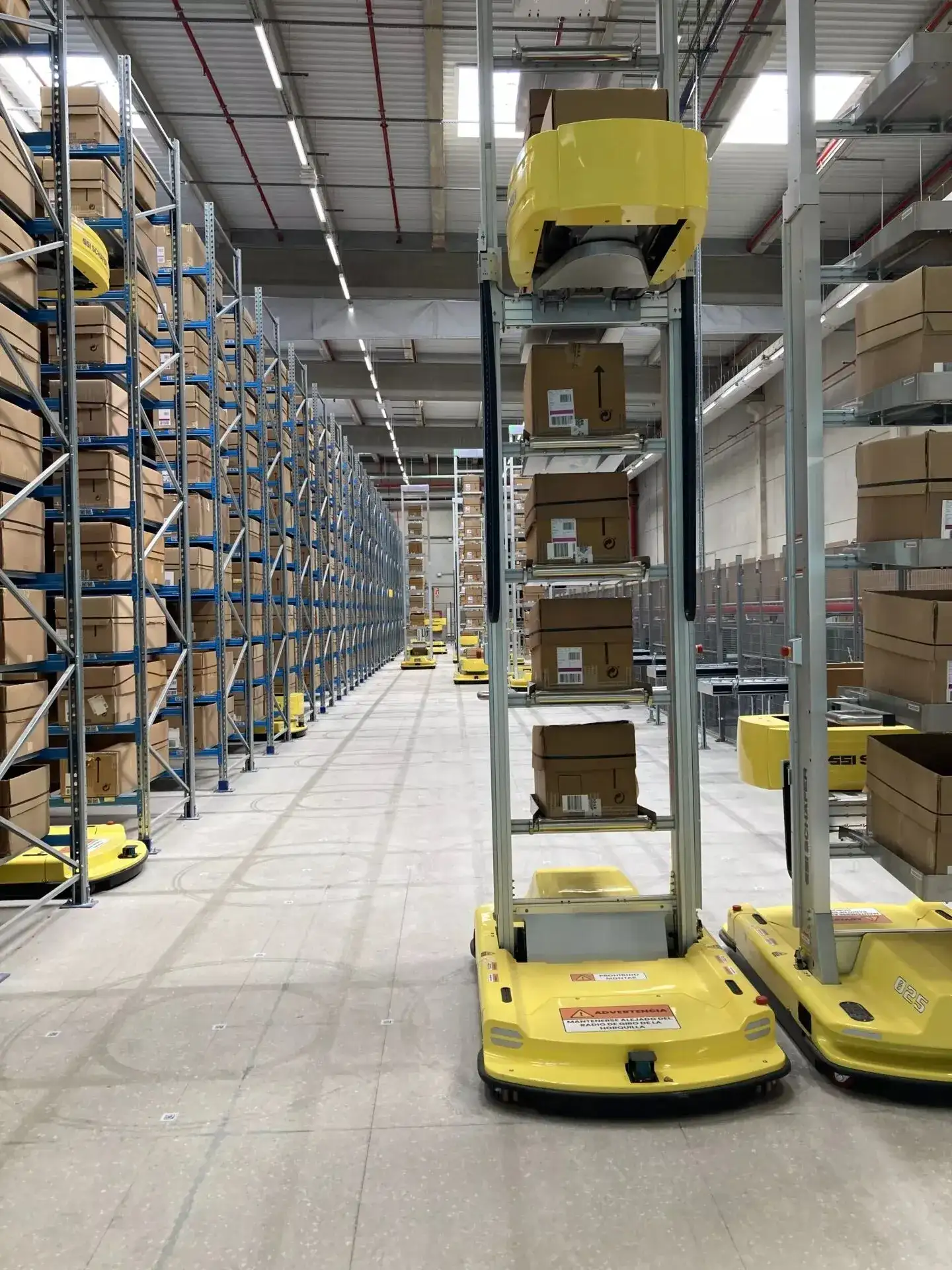
To address these needs, Scalpers implemented the HaiPick ACR system jointly developed with Hai Robotics and a leading integration partner. The project was launched in 2022 to improve operational efficiency, absorb peak demand, and optimize order management for both stores and e-commerce.
Modular, phased deployment
The automation is structured in two stages:
-
Phase 1 (live since August 2024): 12 HaiPick A42TD-L robots, managing 20,000 active double-deep locations.
-
Phase 2 (underway): +14 robots and 40,000 additional locations, bringing total capacity to 100,000 double-deep storage locations and 26 robots in operation once complete.
Layout & performance
-
Automated area: 1,620 m² within the 9,000 m² hub
-
144 racks, 19 levels, 27,000+ locations in Phase 1
-
Pick-to-Light and Put-Wall stations capable of handling up to 250 boxes/hour in each direction
-
4 charging stations
-
Inbound conveyors with 3D scanners ensuring label orientation consistency
Software integration
The system runs on HAIQ in Black Box docking mode:
-
WES manages orders and inventory.
-
ESS schedules equipment, robots, and traffic, optimizing throughput and flexibility.
Results & Impact
The automation of Scalpers’ logistics center has redefined how the brand manages omnichannel fulfilment, combining flexibility, speed, and a clear return on investment.
1. Dramatic throughput gains
During sales campaigns, the same 4,500 orders that once took six days are now shipped in five hours. The project, launched in 2022, arose from the need to streamline order preparation , minimize errors, and maintain service quality during peak periods, especially during promotional campaigns when demand can increase order volume by up to 40 times.
2. Simplified carton handling
Unlike traditional tote-based systems, HaiPick solution handles cartons directly - reducing repacking, labor, and cost while preserving accuracy and speed.
3. Space optimization & operational maturity
Robotization enables Scalpers to compress warehouse capacity from 26,400 m² to 11,500 m² while maintaining accessibility to goods.
4. Scalable investment and future readiness
Built as a modular two-phase project, the system allows Scalpers to scale up gradually without interrupting operations, from 12 robots and 20,000 locations in Phase 1 to 26 robots and 100,000 locations once Phase 2 is complete. This staged approach ensures automation grows in step with business needs while keeping investment efficient.
The project is expected to achieve ROI within five years, driven by productivity gains and optimized space utilization. As Sangalo highlights, one of the main advantages of this solution is:
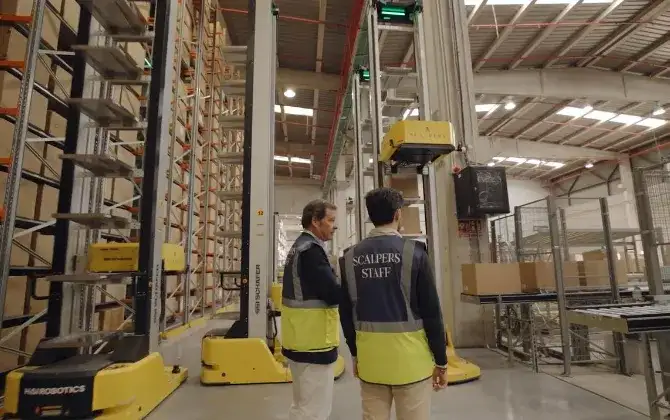
the scalability of the system, which allows both the expansion of storage capacity and the incorporation of new vehicles. Automation increases the speed of order preparation, compensates for the shortage of skilled labor, and minimizes errors, thus improving service quality and reducing costs.
the scalability of the system, which allows both the expansion of storage capacity and the incorporation of new vehicles. Automation increases the speed of order preparation, compensates for the shortage of skilled labor, and minimizes errors, thus improving service quality and reducing costs.
Download
