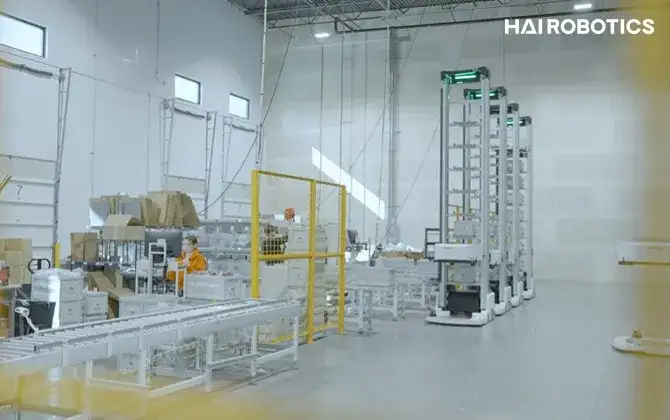
Revolutionizing Logistics with 3PL Technology Solutions and Automation
Enhance your logistics with cutting-edge 3PL technology solutions and automation. Discover how warehouse automation, IoT, and big data analytics drive 3PL efficiency and innovation.
Introduction
Global supply chains are becoming more complex, dynamic, and unpredictable. As a result, third-party logistics (3PL) providers are rapidly adopting 3PL technology solutions to enhance efficiency, scalability, and competitiveness.
The early 2020s have fundamentally reshaped logistics operations. According to Statista, the global 3PL market is expected to reach USD 1.3 trillion in 2024, growing at a CAGR of 2.39%.
In the meantime, there has been a revealing study conducted by McKinsey, which is known as the Logistics Leaders Survey. This study indicates that a significant majority, specifically 87% of shippers and logistics providers, have either raised their technology investments or maintained them at the same level since the year 2020. Furthermore, the findings from this survey also show that 93% of these companies are intending to speed up their investments in technology over the course of the next three years. This suggests a strong commitment within the logistics industry to enhance and modernize their technology to improve efficiency and effectiveness.
Technology is becoming a core competitive differentiator—not a “nice to have.”
The Global 3PL Landscape: A Market in Transformation
The global 3PL industry is experiencing strong momentum driven by:
-
surging e-commerce volumes
-
supply chain disruptions
-
rising labor shortages
-
the need for multi-client operational flexibility
To stay competitive, leading 3PL companies are prioritizing:
-
automation
-
digital visibility
-
data-driven decision-making
Key areas of investment include 3PL warehouse automation, IoT adoption, and big data analytics across global 3PL operations.
These investments reflect the broader 3PL industry trends, where providers are rapidly modernizing operations to meet rising customer expectations. The increasing adoption of 3PL logistics technology—from digital visibility tools to automation—is reshaping how 3PLs manage multi-client fulfillment, labor challenges, and fluctuating demand.
How 3PL Technology Solutions Are Transforming Logistics Operations
Modern 3PL operations rely on integrated, scalable, and flexible technologies. The implementation of these solutions allows service providers to adjust effectively to changes in what consumers are looking for. Additionally, these solutions help facilitate the fulfillment of orders from multiple clients simultaneously, ensuring that all parties receive what they need in a timely manner. Furthermore, by using these solutions, the overall performance within the supply chain can be significantly enhanced, resulting in a more streamlined and efficient operation. As part of the recent trends in 3PL, providers are shifting from manual, labor-intensive processes to scalable, automation-driven workflows. This shift is fueled by the growing need for agility, accuracy, and faster turnaround times.
Core 3PL Technology Solutions Driving Transformation
-
Real-time inventory visibility tools
-
Modular automation platforms (scalable and rapidly deployable)
Together, these systems help 3PL providers:
-
shorten lead times
-
increase picking accuracy
-
reduce operational costs
-
expand storage density
-
maximize throughput without major infrastructure changes
According to the findings presented in Extensiv's 3PL Warehouse Benchmark Report, it is emphasized that the adaptation of technology continues to be an essential factor for third-party logistics providers, especially those who are looking to attract new customers and foster business growth. The report highlights how keeping up with technological advancements can significantly impact the ability of 3PLs to remain competitive in an evolving market and meet the ever-changing needs of their clients. By effectively integrating new technologies, these companies can streamline their operations, enhance service offerings, and ultimately drive growth in their customer base.
Advanced 3PL Technology Solutions Driving Innovation
To remain relevant and competitive, 3PL companies are digitizing core workflows and adopting technology across their networks.
Three foundational technologies are reshaping 3PL performance:
1. Warehouse Automation
Automates repetitive processes such as picking, packing, and replenishment to boost throughput and reduce labor dependency.
2. Internet of Things (IoT)
Provides real-time visibility into assets, inventory, and conditions across the supply chain.
3. Big Data Analytics
Improves forecasting, resource planning, and strategic decision-making through advanced insights.
These innovations enhance transparency, adaptability, and operational resilience—critical capabilities for 3PLs serving diverse industries. Collectively, these 3PL technology solutions help logistics providers modernize operations and stay ahead of market changes. They also form the foundation of 3PL warehouse automation, enabling companies to process higher order volumes, reduce reliance on manual labor, and achieve more consistent service levels across diverse customer portfolios.
3PL Warehouse Automation Solutions and Their Benefits
Warehouse automation adoption is accelerating across the 3PL industry, becoming one of the most influential 3PL trends shaping global fulfillment networks. Technologies commonly used include:
-
Automated Storage and Retrieval Systems (ASRS)
-
Autonomous mobile robots (AMRs) and robotic picking systems
-
Goods-to-Person (G2P) robotics
Key Benefits
-
Reduced labor costs
-
Faster order fulfillment
-
Improved picking accuracy
-
Greater scalability and throughput
According to findings from Extensiv, it has been observed that companies that manage to fulfill their orders in less than 30 minutes demonstrate a 1.67 times greater likelihood of experiencing medium to high profitability growth. This suggests a significant correlation between quick order fulfillment and financial success for businesses.
ShipHero similarly highlights that warehouse automation reduces errors, increases operational speed, and improves inventory tracking.
Additionally, 77% of 3PLs expect to implement more warehouse technologies in 2024.
As the field of robotics continues to evolve and improve at a rapid pace, logistics providers are recognizing the benefits of integrating advanced technologies into their operations. Among these technologies are AGVs, as well as automated item-picking systems and the latest iterations of ASRS. This shift towards automation is being driven by the pursuit of what has been described as "the next frontier of productivity." This ongoing trend is not just a passing phase; it has been highlighted by experts, including those from McKinsey, who point out the significant advantages that these innovations can bring to the efficiency and effectiveness of logistics processes.
Unlocking Supply Chain Visibility with IoT Solutions
As part of the growing 3PL logistics technology landscape, IoT solutions play a key role in improving end-to-end visibility and enabling more proactive decision-making. IoT technology is transforming how 3PL providers monitor and control their supply chains.
IoT enables 3PLs to:
-
Track shipments in real time
-
Monitor environmental conditions (temperature, humidity, vibration)
-
Optimize resource allocation
-
Enhance operational agility
According to the MHI 2024 report:
-
57% of respondents plan to adopt IoT solutions in the next five years
-
23% have already deployed IoT in their logistics operations
Technologies like smart labels, referred to as "Smart Printables" by DHL, are becoming the next significant step forward in improving logistics visibility.
As Christopher Fuss, Head of DHL SmartSolutions IoT, notes:
“IoT is one of the most impactful and important trends for organizations to leverage in their supply chain.”
Leveraging Big Data Analytics for 3PL Optimization
Big data analytics is becoming essential for 3PL companies aiming to improve performance and deepen partnerships with shippers.
Big data empowers 3PLs to:
-
Analyze customer demand and market trends
-
Optimize routing and inventory planning
-
Predict and mitigate risks
-
Improve supply chain agility
-
Enable more strategic shipper–3PL collaboration
Infosys BPM states that 58% of shipping companies experienced a reduction of up to 25% in their supply chain costs by using analytics. DHL highlights that 2024 will bring increased use of big data for predictive risk management.
Data-driven decision-making enhances resilience and efficiency—two pillars of the future 3PL landscape. Big data has become central to many recent trends in 3PL, especially as logistics providers focus on predictive insights, risk mitigation, and smarter resource allocation.
Future Outlook: The Next Era of 3PL Technology Solutions
The convergence of robotics, IoT, automation software, and data analytics is reshaping how 3PL companies operate.
3PL providers that adopt these technologies will benefit from:
-
Improved efficiency
-
Greater transparency across the supply chain
-
More agile, flexible logistics models
-
Better support for e-commerce and personalized fulfillment
-
Stronger competitive differentiation
To succeed, 3PLs must embrace innovation, prioritize sustainability, and invest in secure, integrated digital ecosystems.
As global supply chains continue to evolve, the convergence of robotics, automation software, IoT, and analytics will remain at the center of 3PL technology solutions. These innovations will define the next generation of 3PL warehouse automation, helping providers adapt to new market demands, support e-commerce growth, and build more flexible, resilient logistics networks.
Recent Trends in 3PL Technology and Automation
To stay competitive in a rapidly changing market, 3PL providers are prioritizing investments in warehouse automation, robotics, IoT visibility, and data analytics. These recent trends in 3PL reflect the industry’s shift toward more digital, scalable, and resilient logistics models. As fulfillment complexity rises, adopting advanced 3PL logistics technology is becoming essential for delivering faster, more accurate, and more cost-efficient services.
Conclusion
The evolution of global 3PL automation and technology trends marks a pivotal moment for the logistics industry. By adopting warehouse automation, harnessing IoT visibility, and leveraging powerful data analytics, 3PL providers can build more resilient, efficient, and future-ready operations.
Hai Robotics is proud to support 3PL companies with advanced warehouse automation systems and HaiQ, our intelligent warehouse software platform.
Discover how our solutions help 3PLs scale efficiently and stay competitive in a rapidly evolving market, please contact us.
References:
1. “2023 Third-Party Logistics Warehouse Benchmark Report.” Extensiv, 19 Oct. 2023 Accessed 2 May 2024.
2. “Four Logistics Trends to Watch in 2024.” DHL, Feb. 2024, Accessed 2 May 2024.
3. “3PL – Gain Competitive Advantage with Data Analytics | Infosys BPM.” Infosys BPM, Accessed 2 May 2024.
4. Mount, Clyde. “2024 Trends in Third-Party Logistics: Innovations That Are Reshaping the Industry | 3PL Worldwide.” 3PL Worldwide, 22 Jan. 2024, Accessed 2 May 2024.
5. NTT, Data, et al. Third Party Logistics Study. 1 Jan. 2024, pp. 0–75, Accessed 2 May 2024.
6. Sandy Gosling, et al. “Digital Logistics: Technology Race Gathers Momentum | McKinsey.” www.mckinsey.com, 16 Nov. 2023, Accessed 2 May 2024.
7. “Third Party Logistics (3PL) - Global | Market Forecast.” Statista
8. “What Are 3PL Warehouse Automation Solutions?” ShipHero, 30 Dec. 2022